
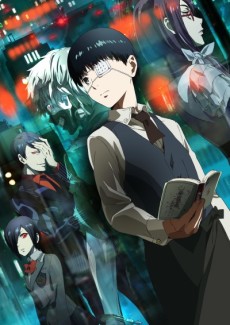
Tokyo Ghoul

Overview

In the expansive catalog of dark fantasy and suspense horror, few titles have left as indelible a mark on mid-2010s anime culture as Tokyo Ghoul. Released in the blockbuster summer season of 2014, this 12-episode television adaptation immediately captured the attention of global audiences, quickly cementing its place as a modern dark classic. Produced by the veteran animation powerhouse Studio Pierrot, the series is adapted from Sui Ishida’s critically acclaimed, best-selling MANGA of the same name. Currently holding a solid 76 rating on OniDex, the anime’s status is registered as FINISHED, representing a complete first installment of a broader, multi-season franchise that permanently shifted how psychological horror is framed in modern television animation.

Set against the backdrop of a grim, alternative version of Japan’s capital, the series masterfully blends visceral body horror with deeply tragic psychological drama. As an editorial team at OniDex, we look back at the 2014 debut of this franchise to understand how its themes of alienation, identity crisis, and societal dichotomy resonated so profoundly with viewers. Below is a comprehensive profile detailing the narrative architecture, thematic depth, production realities, and enduring legacy of this landmark release.

Tokyo Ghoul — OniDex Database Profile
Release Year 2014
Episode Count 12
Studio Studio Pierrot
Source Material MANGA
Genres Action, Drama, Horror, Mystery, Psychological, Supernatural
OniDex Rating 76
Status FINISHED

Story Summary

The suspense horror/dark fantasy story is set in Tokyo, which is haunted by mysterious “ghouls” who are devouring humans. People are gripped by the fear of these ghouls whose identities are masked in mystery. These creatures live among regular citizens, perfectly mimicking human behavior and appearance, only revealing their true nature when hunting. Their biological makeup prevents them from consuming normal human food, forcing them to survive entirely on human flesh, which drives an insurmountable wedge between the two species.

Into this tense, fragile status quo enters Ken Kaneki, an ordinary, introverted college student majoring in Japanese literature. Kaneki frequents Anteiku, a quiet, cozy neighborhood café in the 20th Ward, where he regularly encounters a captivating, elegant girl named Rize Kamishiro. Like Kaneki, Rize is an avid reader, and their shared appreciation for the works of fictional novelist Sen Takatsuki leads to a date. Little does he realize that his fate will change overnight.

The date takes a horrifying turn when Rize lures Kaneki into a secluded construction site, revealing herself to be a notorious, highly predatory ghoul known as the “Binge Eater.” Before she can completely consume him, a freak accident occurs: heavy steel beams fall from the upper scaffolding of the construction site, crushing Rize and leaving Kaneki on the brink of death. Rushed to a hospital, Kaneki undergoes an emergency organ transplant. The desperate surgeon, unaware of Rize’s true biology, grafts her vital organs into Kaneki’s body to save his life.

Upon waking, Kaneki finds himself transformed into a “one-eyed ghoul”—the first known half-human, half-ghoul hybrid. His body rejects regular human food, tasting only ash and decay, while his left eye transforms into the crimson and black iris of a hungry predator. Trapped in a purgatory between two warring worlds, Kaneki must navigate his terrifying new physical cravings, protect his lingering humanity, and survive the hostile factions of both the predatory ghoul underground and the ruthless government organization dedicated to exterminating them.

Main Characters

The compelling narrative of Tokyo Ghoul is driven by a highly memorable cast of characters who represent different facets of the human-ghoul conflict. Below are the prominent figures of the 2014 series:

  • Ken Kaneki: The central protagonist of the series. Originally a gentle, bookish human college student, his world is shattered when he is transformed into a half-ghoul. Kaneki represents the tragic bridge between the two species, suffering immensely as he tries to resist his biological urge to consume human flesh while struggling to protect those he cares about.
  • Rize Kamishiro: A deceptively beautiful, voracious ghoul who loves literature and hunts without restraint. Though her physical body is crushed in the accident that triggers the series, her organs live on inside Kaneki, and her psychological projection continuously haunts his subconscious, tempting him to embrace his inner monster.
  • Touka Kirishima: A fiercely independent, hardened teenager who works as a waitress at the Anteiku café. While she maintains the guise of an ordinary high school student to fit into human society, she is a powerful ghoul with a cynical view of humanity. Despite her cold exterior, she becomes an essential mentor and protector to Kaneki as he transitions into his new life.
  • Yoshimura: The wise, compassionate elderly manager of Anteiku. He advocates for peaceful coexistence between humans and ghouls, teaching Kaneki how to blend in and offering a safe haven for ghouls who refuse to hunt humans needlessly.
  • Kotaro Amon: A highly dedicated investigator for the Commission of Counter Ghoul (CCG). Driven by a tragic past, Amon views all ghouls as inherently evil monsters disrupting a righteous world, serving as a powerful thematic foil to Kaneki’s perspective.

Episode Information

The first season of the anime consists of exactly 12 tightly paced episodes. Airing from July to September 2014, this run adapts the foundational arcs of the original MANGA, guiding the viewer through Kaneki’s traumatic transition from ordinary human to a hardened survivor of the supernatural underworld.

The narrative structure of these 12 episodes can be broken down into three major dramatic movements:

  1. The Descent (Episodes 1-4): These early episodes focus primarily on Kaneki’s immediate psychological horror after his surgery. The viewer witnesses his physical denial of ghoul biology, his introduction to the safe haven of Anteiku, and his first encounters with the harsh realities of ghoul territoriality.
  2. The Conflict of Coexistence (Episodes 5-8): The middle section introduces the systematic threat of the Commission of Counter Ghoul (CCG) investigators. It highlights the escalating tensions in the 20th Ward, culminating in tragic confrontations that demonstrate that brutality and grief exist in equal measure on both sides of the species divide.
  3. The Crucible (Episodes 9-12): The final act of the season escalates into all-out warfare in the 11th Ward as a radical ghoul faction known as the Aogiri Tree enters the fray. Kaneki is captured and subjected to severe physical and psychological torture, leading to a legendary, paradigm-shifting transformation in the season finale.

Genres and Themes

The OniDex classification lists Tokyo Ghoul under the genres of Action, Drama, Horror, Mystery, Psychological, and Supernatural. Each of these genres is meticulously woven into the fabric of the story, elevating it beyond standard battle-oriented dark fantasy.

The Horror and Supernatural elements are highly visceral, characterized by the terrifying biology of the ghouls, who possess predatory organs called “kagune” that sprout from their bodies like weapons of flesh and blood. However, the anime’s true strength lies in its Psychological and Drama aspects. The narrative functions as an intense study of alienation. Kaneki’s struggle represents the ultimate crisis of identity: he is too human to belong in the ghoul world, yet too much of a ghoul to return to his human life. This duality explores the concept of the “other” and the psychological toll of concealing one’s true nature from a hostile society.

Furthermore, the Mystery genre is utilized to explore the origins of the ghouls, the true motives of the CCG, and the mysterious circumstances surrounding the construction site accident that changed Kaneki’s life. The story consistently deconstructs black-and-white morality. By showing the grief of human families whose loved ones were killed by ghouls, alongside the grief of ghoul families hunted down like animals by the state, the series poses a haunting philosophical question: in a world built on a tragic food chain, who is the real monster?

Production and Studio

The task of adapting Sui Ishida’s highly detailed and stylized MANGA fell to Studio Pierrot, a studio with an illustrious history of producing long-running, iconic anime franchises. For Tokyo Ghoul, the studio opted for a high-intensity, condensed seasonal structure, focusing their creative energy on delivering an atmosphere of dark, urban gothic beauty.

The production design of the 2014 series is particularly notable for its striking use of color contrast. Director Shuhei Morita, who had previously earned an Oscar nomination for his work on Short Peace, brought an avant-garde aesthetic sensibility to the project. The animation contrasts the mundane, desaturated grays of daytime Tokyo with the neon-drenched, blood-slicked streets of the city at night. The design of the kagune—vibrant, translucent, and organic—gives the action sequences a unique visual signature that stands out within the supernatural genre.

Perhaps the most celebrated aspect of the production is its sound design and musical score. Composed by Yutaka Yamada, the soundtrack masterfully balances melancholic piano melodies with intense, operatic orchestral tracks that elevate the tragic weight of the drama. Additionally, the opening theme song, “Unravel” by TK from Ling Tosite Sigure, became a global cultural phenomenon. Its soaring, emotionally desperate vocals and frantic instrumentation perfectly encapsulated Kaneki’s fractured mental state, earning it a reputation as one of the most iconic anime openings of the 21st century.

Reception and Popularity

Upon its release in 2014, Tokyo Ghoul became an overnight sensation, driving massive global interest in the franchise. It significantly boosted the sales of the original manga, turning the IP into one of the most profitable properties of the decade. The anime’s atmospheric visual style, combined with its high-stakes action and tragic themes, resonated deeply with a broad international demographic, cementing the “one-eyed ghoul” aesthetic—complete with black fingernails, white hair, and a leather zipper mask—as a staple of mid-2010s cosplay and fan culture.

On the OniDex database, the series holds a respectable rating of 76. While this rating reflects the immense praise for the show’s artistic direction, voice acting, and memorable action sequences, it also factors in the critiques from the core manga readership. Because the series condensed a substantial portion of the source material into just 12 episodes, some narrative subplots and character developments were shortened or altered. Despite these adaptation challenges, the general fan reception remains incredibly positive, with the first season widely regarded as a gripping, highly atmospheric gateway into the dark fantasy genre.

Why Fans Love This Anime

The enduring popularity of Tokyo Ghoul can be attributed to several core elements that continue to attract new viewers to this day:

  • The Relatable Tragedy of Ken Kaneki: Unlike traditional heroes who seek power or adventure, Kaneki is a victim of circumstance. Audiences are deeply moved by his vulnerability and his desperate, often heartbreaking attempts to cling to his humanity despite his horrifying circumstances.
  • Stunning Character and Creature Designs: The visual contrast of the ghouls—ranging from their ordinary human clothing to their terrifying kakugan (red and black eyes) and the beautiful, deadly shapes of their kagune—creates an incredibly compelling aesthetic that appeals to fans of dark fantasy and horror.
  • A Masterful Season Finale: The twelfth episode of the series, which features Kaneki’s brutal psychological confrontation with his inner self and his ultimate acceptance of his ghoul nature, is widely cited as one of the most thrilling and artistically directed finales in modern anime history.
  • Iconic Music and Atmosphere: The combination of a hauntingly beautiful orchestral score and the legendary opening theme song “Unravel” creates an immersive emotional landscape that intensifies the viewing experience.

Final Thoughts

With its status registered as FINISHED, the 2014 adaptation of Tokyo Ghoul remains a definitive cultural touchstone of its era. Across its 12 episodes, Studio Pierrot succeeded in crafting a dark, atmospheric, and highly emotional experience that captured the imaginations of millions of fans worldwide. While its OniDex rating of 76 reflects the historical debates surrounding the adaptation pacing of its MANGA source material, the undeniable impact of its visual style, legendary soundtrack, and profound psychological themes cannot be overstated.

Whether you are a seasoned anime historian exploring the evolution of dark fantasy or a newcomer looking for an engaging, suspenseful horror story, the tragic journey of Ken Kaneki stands as an essential viewing experience. It is a haunting reminder of the delicate balance between humanity and monstrosity, and it continues to hold a prominent, well-deserved place in the global anime database.