
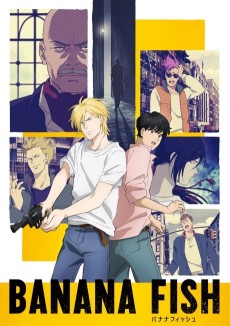
BANANA FISH
Overview
The 2018 television series BANANA FISH stands as a monumental achievement in the landscape of modern media, bridging the gap between historical source material and contemporary production standards. Based on the acclaimed manga of the same name, this production was handled by the prestigious Studio MAPPA, a studio known for its willingness to tackle complex, emotionally charged, and high-stakes narratives. Since its release, the series has maintained a formidable reputation, currently holding a rating of 84 among critics and fans alike. This rating reflects the show’s ability to resonate with a wide audience despite its heavy subject matter and uncompromising look at the darker sides of human nature.
BANANA FISH consists of 24 episodes, a format that allowed the production team to adapt a significant portion of the original manga while maintaining a breakneck pace suitable for a modern thriller. As a “FINISHED” series, it offers a complete and definitive narrative journey, providing viewers with a sense of closure that is often rare in the industry. The series is categorized under the genres of Action, Drama, Psychological, and Thriller, and it successfully weaves these elements together to create a story that is as intellectually stimulating as it is visceral. The 2018 release was timed to honor the legacy of the original creator while updating the setting to modern-day New York City, a creative choice that gave the story a renewed sense of urgency and relevance.
Story Summary
The narrative of BANANA FISH is a sprawling urban epic set against the gritty, unforgiving backdrop of New York City. The story follows Ash Lynx, a seventeen-year-old runaway who has been groomed since childhood to be the perfect weapon. Nature gifted Ash with extraordinary beauty and a genius-level intellect, but nurture—specifically the brutal upbringing provided by the crime boss “Papa” Dino Golzine—transformed him into a cold, ruthless killer. Ash is the leader of a street gang, but he is also the crown prince of Golzine’s criminal empire, a position he despises and seeks to escape at any cost.
The central mystery of the series revolves around the cryptic phrase “Banana Fish.” These were the only words spoken by Ash’s older brother, Griffin, after he suffered a violent mental breakdown during his military service in Vietnam. For years, Ash has sought the truth behind these words, a quest that eventually puts him on a collision course with Dino Golzine’s latest ambitions. Golzine has acquired a terrifying secret that could grant him unparalleled power, and Ash is the only one standing in his way.
Amidst this escalating shadow war, Ash meets Eiji Okamura, a pure-hearted young photographer’s assistant from Japan who has traveled to New York to document street gangs. Eiji is the antithesis of the world Ash inhabits; he is kind, unassuming, and fundamentally decent. Their meeting is a catalyst for change in Ash’s life, providing him with a glimpse of a world defined by genuine connection rather than exploitation. However, Eiji’s presence also makes Ash vulnerable, as his enemies quickly realize that the photographer is the only person the ruthless gang leader truly cares about. The story follows their struggle to survive a conspiracy that reaches the highest levels of the American government and the international criminal underworld, all while Ash attempts to reclaim his humanity from the man who stole it.
Main Characters
Ash Lynx is the heart of BANANA FISH. He is a character of immense complexity, defined by the juxtaposition of his angelic appearance and his lethal capabilities. Ash is a survivor of systemic abuse, and his character arc is a harrowing exploration of trauma and the desire for autonomy. Despite his cold exterior, he possesses a deep sense of loyalty and a hidden yearning for peace, which is only brought to the surface through his relationship with Eiji.
Eiji Okamura serves as the emotional anchor for the series. While he initially appears out of his depth in the violent streets of New York, his resilience and unwavering support for Ash become the show’s moral compass. Eiji is not a fighter, but his “pure-hearted” nature, as described by the source material, allows him to see the boy behind the killer. His presence challenges Ash to imagine a life beyond the cycle of violence and revenge.
Dino Golzine is the primary antagonist, a man whose insatiable ambition is matched only by his cruelty. As the head of a powerful Mafia family, he views Ash as his most valuable possession—a tool to be refined and a successor to be controlled. His obsession with Ash is the driving force behind much of the conflict, and his willingness to use “Banana Fish” as a weapon of mass influence demonstrates the depth of his villainy. Golzine represents the corruption of the adult world that seeks to devour youth and innocence.
Supporting characters such as Shorter Wong and Max Lobo round out the cast. Shorter, the leader of the Chinatown gang and Ash’s closest ally, provides a sense of brotherhood and shared struggle. Max Lobo, a veteran journalist and former soldier who served with Ash’s brother, acts as a paternal figure and an investigator, helping Ash piece together the technical and political aspects of the Banana Fish conspiracy. Each character is meticulously developed, contributing to the show’s status as a high-tier Drama and Psychological thriller.
Episode Information
The 24-episode structure of BANANA FISH is divided into two distinct halves, or “cours,” that allow the story to evolve from a street-level gang war into a massive political conspiracy. Each episode is titled after a famous work of Western literature, such as “The Catcher in the Rye” or “A Perfect Day for Bananafish,” signaling the show’s intellectual ambitions and its focus on themes of alienation and lost innocence. This naming convention adds a layer of depth for viewers, connecting the events of the anime to broader literary traditions of tragedy and social critique.
The pacing of the 24 episodes is notoriously relentless. Because the series covers a significant amount of the original MANGA, there is little room for “filler” or extraneous subplots. Every episode serves a purpose, whether it is advancing the investigation into the mysterious drug, developing the bonds between the main cast, or showcasing the high-octane action that characterizes the Thriller genre. The “FINISHED” status of the anime ensures that viewers are treated to a complete narrative arc, culminating in a series of final episodes that are renowned for their emotional intensity and thematic resonance.
Genres and Themes
BANANA FISH is a masterclass in genre-blending. As an Action series, it delivers frequent, high-stakes gunfights and tactical maneuvers that reflect Ash’s military-like precision. As a Thriller, it keeps the audience on edge through a web of betrayal, political maneuvering, and the constant threat of the “Banana Fish” weapon. However, it is the Drama and Psychological components that truly define the series. The show delves into the psychological toll of sexual abuse, the nature of power, and the difficulty of breaking free from one’s past.
One of the major themes is “Nature vs. Nurture.” The description notes that nature made Ash beautiful but nurture made him a killer. The series examines whether a person can ever truly transcend the environment that shaped them. Another central theme is the concept of freedom. For Ash, freedom isn’t just about escaping Dino Golzine; it is about the right to exist without being used as a tool by others. The relationship between Ash and Eiji also introduces themes of unconditional love and redemption, suggesting that even in the darkest circumstances, human connection can provide a sanctuary.
The series also touches on systemic corruption, showing how criminal organizations and government agencies often share the same goals. The “Banana Fish” project is not just a crime story; it is a critique of the lengths to which those in power will go to maintain their status. The Psychological genre tag is earned through the show’s unflinching portrayal of PTSD, drug-induced psychosis, and the mental games played by the antagonists to break Ash’s will.
Production and Studio
The production of BANANA FISH was handled by Studio MAPPA, which has become one of the most respected names in the anime industry. Released in 2018, the series showcases the studio’s ability to produce high-quality animation that balances gritty realism with cinematic flair. The art direction is particularly notable for its depiction of New York City. The animators captured the distinct atmosphere of various neighborhoods, from the glitzy penthouses of the upper class to the decaying alleyways where Ash’s gang operates. This attention to detail enhances the “urban thriller” feel of the show.
Studio MAPPA also made the bold decision to update the setting from the original 1980s era of the manga to the 2010s. This required modernizing technology and fashion while keeping the core plot points intact. The transition was seamless, proving the studio’s skill in adaptation. The character designs are sharp and expressive, allowing the subtle shifts in Ash’s emotional state to be conveyed through visual cues. The animation quality remains consistent throughout the 24 episodes, with fluid action sequences and evocative lighting that heightens the Drama and Psychological tension.
The reputation of Studio MAPPA for taking on “difficult” or “niche” projects and turning them into mainstream successes was solidified with BANANA FISH. The studio’s commitment to the source material—honoring the vision of the original creator while making it accessible to a modern audience—is a testament to their professional standards. The direction and music also play a vital role, with a soundtrack that blends jazz, electronic, and orchestral elements to mirror the chaotic and soulful nature of New York City.
Reception and Popularity
Upon its release in 2018, BANANA FISH became a global sensation. Its rating of 84 is a clear indicator of its widespread acclaim. It was particularly praised for its mature storytelling and its refusal to shy away from difficult topics. Unlike many other series, BANANA FISH treats its audience with respect, assuming a level of emotional maturity that allows for a deeper exploration of its characters’ lives. This approach helped it garner a dedicated following that spans across different demographics.
The fan reception has been overwhelmingly positive, though often characterized by the emotional “weight” the show leaves behind. The series is known for being an “emotional rollercoaster,” and its popularity on social media and database platforms persists years after it was finished. It has been cited as a “must-watch” for those who appreciate character-driven dramas and high-stakes thrillers. The popularity of the series also led to a resurgence of interest in the original MANGA, proving that a well-executed anime adaptation can breathe new life into a classic property.
Culturally, BANANA FISH has had a significant impact on how Western-set stories are perceived in the medium. It proved that a story set in the United States, dealing with American socio-political issues, could be handled with nuance and authenticity by a Japanese studio. It also broke barriers in terms of character relationships, presenting the bond between Ash and Eiji with a level of sincerity and depth that resonated deeply with viewers seeking more complex portrayals of male friendship and intimacy.
Why Fans Love This Anime
Fans are drawn to BANANA FISH for a variety of reasons, but the most prominent is the relationship between Ash and Eiji. In a world defined by violence, exploitation, and cynicism, their bond represents a pure, unselfish form of love. The way they protect and support each other provides the necessary emotional relief from the intense Action and Thriller elements of the plot. Fans often cite this dynamic as the soul of the series, making the high-stakes conflict feel personal and meaningful.
Another reason for its popularity is the character of Ash Lynx himself. He is a tragic hero in the truest sense—someone with immense potential who has been dealt a terrible hand by fate. His intelligence and tactical brilliance make him a compelling protagonist to watch, but it is his vulnerability and his struggle to heal that make him relatable. The “bad boy” archetype is subverted here; Ash isn’t rebellious for the sake of it, but as a survival mechanism against a world that wants to own him.
The high animation quality provided by Studio MAPPA also plays a role. The visceral nature of the fights, the atmospheric backgrounds, and the expressive character acting all contribute to an immersive viewing experience. Furthermore, the plot’s complexity—involving corporate espionage, pharmaceutical conspiracies, and street-level gang wars—appeals to viewers who want a story they can sink their teeth into. The series doesn’t provide easy answers, and its willingness to let characters face real, permanent consequences adds a layer of tension that is often missing from more conventional shows.
Final Thoughts
BANANA FISH is a rare example of an adaptation that manages to honor its roots while feeling entirely contemporary. Through its 24 episodes, it takes viewers on a journey through the darkest corners of New York City and the human soul, guided by the light of a singular, profound friendship. The combined efforts of Studio MAPPA and the strength of the original MANGA source material resulted in a series that is as beautiful as it is brutal. With a rating of 84, it remains a benchmark for what can be achieved in the Psychological and Drama genres.
Whether it is the expertly choreographed action, the intricate plot surrounding the “Banana Fish” mystery, or the heartbreakingly human characters, there is something in this series for every mature viewer. It is a story about the cost of freedom and the power of being seen for who you truly are, rather than what you can do for others. As a FINISHED 2018 release, its legacy is secure as one of the most impactful and emotionally resonant series of its decade. For anyone seeking a narrative that is both a thrilling crime epic and a sensitive character study, BANANA FISH is an essential experience.