
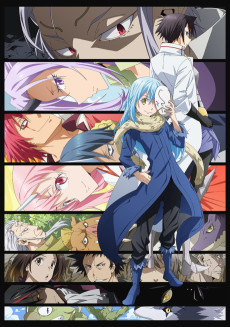
That Time I Got Reincarnated as a Slime Season 2
Overview
That Time I Got Reincarnated as a Slime Season 2 represents a pivotal turning point in one of the most celebrated modern fantasy epics. Released in 2021, this continuation of the saga produced by the esteemed studio 8-bit elevated the stakes of the narrative from simple survival and village-building to the complex realms of international diplomacy, existential warfare, and divine ascension. Following the massive success of its predecessor, the second season arrived with high expectations, which it met with a sophisticated blend of geopolitical intrigue and high-octane magical combat. With a solid rating of 83, the series solidified its place as a cornerstone of the fantasy genre, moving beyond the lighthearted foundations of the early story into a darker, more mature exploration of what it means to lead a nation of monsters in a world dominated by human prejudice.
Spanning 12 episodes in this specific seasonal run, the production highlights the continued evolution of Rimuru Tempest, a protagonist who began as a humble slime and has grown into the Chancellor of the Jura Tempest Federation. The 2021 release year marked a significant moment for fans who had been waiting for the adaptation of the “Birth of a Demon Lord” arc, a sequence famously detailed in the original LIGHT_NOVEL source material. Under the meticulous direction of the team at 8-bit, the season transitions from the bright, adventurous tone of the first season into a gripping thriller that tests the protagonist’s pacifist philosophy. As a “FINISHED” status production for this specific cour, it provides a complete and harrowing look at the consequences of Rimuru’s rise to power and the inevitable friction that occurs when a monster kingdom seeks equal footing with human civilizations.
Story Summary
The narrative of That Time I Got Reincarnated as a Slime Season 2 begins with the Jura Tempest Alliance at its peak. The city of Rimuru has become a bustling hub of trade and innovation, drawing the attention of neighboring powers. The story quickly expands the scope of the world by introducing the animal kingdom of Eurazania. Rimuru initiates a diplomatic exchange with the Beast Kingdom, overseen by the Demon Lord Carrion. This subplot highlights the “Adventure” and “Fantasy” genres as we see the diverse cultures of the Beastmen, including the formidable Beastketeers, and how they integrate into Rimuru’s growing network of allies. Meanwhile, the story sees a significant reunion with King Gazel Dwargo, the Hero King of the Armed Nation of Dwargon. These early moments reinforce the “Comedy” and “Action” elements as delegates clash in sparring matches that serve as both training and cultural exchange.
However, the heart of the story lies in the “rising tensions between monsters and humans.” As the Jura Tempest Federation grows in economic and military might, the human Kingdom of Falmuth begins to view them as a threat to their own trade monopoly. This greed, coupled with the religious extremism of the Western Holy Church, sets the stage for a devastating conflict. The Church views all monsters as entities to be purged, leading to a coordinated assault on Rimuru’s city while he is away. While attempting to return home, Rimuru encounters the strongest enemy he’s ever faced: Hinata Sakaguchi. Hinata, the Commander of the Holy Knights and a fellow person from Earth, possesses skills specifically designed to neutralize monsters, resulting in a desperate battle of survival that pushes Rimuru to his absolute limits.
The latter half of the 12 episodes shifts from diplomacy to tragedy and eventually to a quest for ultimate power. Upon returning to a devastated Tempest, Rimuru is forced to confront the flaws in his optimistic worldview. The loss of his friends and citizens acts as the catalyst for a dark metamorphosis. To save those he loves, Rimuru must abandon his self-imposed restriction on harming humans and embark on a path toward becoming a True Demon Lord. This requires a massive soul sacrifice, leading to the “Harvest Festival,” a supernatural event that reshapes the power balance of the entire world. The story concludes this segment with Rimuru’s terrifying display of power against the Falmuth army, showcasing a level of magical prowess rarely seen in the fantasy genre.
Main Characters
At the center of That Time I Got Reincarnated as a Slime Season 2 is Rimuru Tempest. In this season, we see Rimuru transition from a benevolent leader to a focused and formidable sovereign. His internal conflict—balancing his memories as a human with his responsibilities as a monster—reaches a breaking point. His growth is not just in terms of magical “Action” capability but in psychological depth, as he learns that kindness without the strength to protect it is merely a liability. His transformation during the Harvest Festival is the narrative peak of these 12 episodes, marking his transition into a new tier of existence.
The supporting cast of the Jura Tempest Federation also receives significant development. Benimaru, the Commander-in-Chief, demonstrates his unwavering loyalty and tactical brilliance during the defense of the city. Shion and Shuna provide emotional weight to the story, with Shion’s fate serving as the primary motivation for Rimuru’s transformation. On the diplomatic front, the season introduces Albis, Suphia, and Phobio of the Three Beastketeers, representing the martial pride of Eurazania. Their interactions with Rimuru’s subordinates add layers to the “Adventure” aspect of the show, proving that the world is populated by diverse and complex factions rather than simple caricatures.
The antagonists of the season are equally compelling. Hinata Sakaguchi serves as a perfect foil to Rimuru. As the “strongest enemy” mentioned in the premise, she is cold, efficient, and fueled by a sense of justice that happens to oppose Rimuru’s existence. Her combat style, utilizing the “Dead End Rainbow” and “Disintegration,” provides some of the most intense action sequences of the 2021 release. Additionally, the greed-driven King Edmaris of Falmuth and the manipulative Archbishop Reyhiem represent the human flaws of avarice and fanaticism, providing a grounded, political contrast to the high-fantasy battles involving dragons and demon lords.
Episode Information
That Time I Got Reincarnated as a Slime Season 2 consists of 12 episodes in its first part, a structure that allowed studio 8-bit to meticulously pace the transition from peaceful nation-building to total war. The early episodes (1 through 4) focus heavily on world-building and diplomacy. These episodes cover the trade agreements with Eurazania and the technological advancements within Tempest. While slower in pace, they are essential for establishing the stakes; the audience needs to see the beauty of the city to feel the impact of its later destruction.
Episodes 5 through 8 mark the beginning of the “Action” and “Fantasy” escalation. The tension boils over as the Kingdom of Falmuth and the Western Holy Church begin their infiltration. These episodes are characterized by a sense of dread, culminating in the ambush on the streets of Tempest and Rimuru’s desperate struggle against Hinata Sakaguchi. The direction in these episodes highlights the vulnerability of the monsters when stripped of their magic by anti-monster barriers, a tactical detail that adds depth to the combat system.
The final block of episodes (9 through 12) focuses on the “Harvest Festival.” This is the most critically acclaimed portion of the season, where the rating of 83 is truly earned. Episode 10, in particular, is noted for its shift in tone, as Rimuru prepares for the ritual. The finale of this 12-episode run features the “Megiddo” spell, a breathtaking display of magical annihilation that redefined the protagonist’s power level. The season concludes with the summoning of a Primal Demon, a legendary figure from the LIGHT_NOVEL lore, setting the stage for future conflicts while providing a satisfying sense of closure to the immediate threat of the Falmuth invasion.
Genres and Themes
The genres of Action, Adventure, Comedy, and Fantasy are expertly woven into the fabric of That Time I Got Reincarnated as a Slime Season 2. The “Action” is far more consequential than in the previous season, with battles having permanent impacts on the world map and character rosters. The “Adventure” genre is represented through the diplomatic missions to new lands like Eurazania, expanding the geography of the Jura Forest. Despite the darker tone, “Comedy” still finds its way into the narrative through Rimuru’s relatable internal monologues and the eccentricities of his subordinates, providing necessary levity between intense story beats.
Thematically, the season explores the “Ethics of Sovereignty.” Rimuru is forced to ask: What does a ruler owe to his people? His initial desire to befriend humans leads to tragedy, prompting a thematic shift toward the “Necessity of Power.” The anime suggests that in a fantasy world of monsters and heroes, pacifism can be a form of negligence if not backed by the strength to enforce peace. This evolution is a core component of the LIGHT_NOVEL source material and is captured perfectly in the 2021 adaptation.
Another major theme is “Humanity vs. Monstrosity.” The series subverts traditional fantasy tropes by portraying the monster nation as civilized, industrial, and compassionate, while the human kingdoms are shown as fractured, greedy, and governed by religious dogma. This role reversal challenges the audience to define “humanity” not by race or species, but by actions and empathy. The “rising tensions between monsters and humans” mentioned in the description serve as a catalyst for this philosophical exploration, making the series much more than a simple power-fantasy story.
Production and Studio
Studio 8-bit, the production house behind this hit, demonstrated significant growth in That Time I Got Reincarnated as a Slime Season 2. Having established a solid foundation in the first season, they utilized the 2021 release to showcase higher-tier animation quality, particularly in the handling of complex magical effects and large-scale battles. The use of color is particularly noteworthy; the vibrant, hopeful hues of Tempest are contrasted sharply with the cold, muted grays and purples used during the invasion and Rimuru’s subsequent transformation. This visual storytelling reinforces the narrative shift into darker territory.
The studio’s reputation was greatly enhanced by their faithful adaptation of the LIGHT_NOVEL. Fans of the source material praised 8-bit for their attention to detail, especially regarding the intricate magic systems and the internal logic of the “Great Sage” (now “Raphael”) evolution. The character designs remain consistent, but there is a noticeable increase in the detail of facial expressions, allowing for more nuanced emotional performances during the season’s many dramatic peaks. The sound design also deserves mention, with the atmospheric score and visceral sound effects of the “Megiddo” sequence becoming a highlight for many viewers.
The “FINISHED” status of this 12-episode block allows researchers to look back at 8-bit’s work as a masterclass in adaptation. They managed to condense heavy political dialogue into engaging television without losing the “Fantasy” wonder that defines the series. Their ability to balance the “Comedy” and “Action” elements while maintaining a high level of visual fidelity contributed directly to the anime’s 83 rating and its status as a top-tier production of the 2021 anime calendar.
Reception and Popularity
Upon its release in 2021, That Time I Got Reincarnated as a Slime Season 2 became an instant sensation among the global anime community. Its rating of 83 reflects a high level of critical and audience satisfaction, placing it among the elite fantasy titles of the year. The popularity of the series can be attributed to its unique “nation-building” hook, which provides a level of satisfaction that traditional “hero’s journey” stories often lack. Watching a small village evolve into a global superpower resonates with audiences who enjoy progression and strategy.
Fan reception was particularly strong regarding the “Demon Lord” transformation. After dozens of episodes of Rimuru being a “nice guy,” the shift toward a more ruthless, protective leader was met with overwhelming praise. The “rising tensions between monsters and humans” provided the dramatic weight that some felt the first season lacked. The introduction of Hinata Sakaguchi also sparked intense discussion, as she provided a legitimate threat to Rimuru, adding a layer of suspense that kept viewers engaged throughout the 12-episode run.
The cultural impact of the season is evident in its longevity. Even after its status changed to “FINISHED,” the series remains a frequent topic of discussion in database circles and fan forums. It proved that the “reincarnation” sub-genre could handle heavy, dark themes without losing its core identity. The success of the second season also validated the LIGHT_NOVEL as a premier source for high-quality fantasy content, further cementing the franchise’s legacy in the 2020s anime landscape.
Why Fans Love This Anime
One of the primary reasons fans gravitate toward That Time I Got Reincarnated as a Slime Season 2 is the “Competency Porn” aspect of its protagonist. Rimuru is not just powerful; he is intelligent, charismatic, and surrounded by a loyal council of experts. Seeing the Jura Tempest Alliance solve problems through a combination of diplomatic maneuvering and, when necessary, overwhelming force is immensely satisfying. The “Fantasy” world feels lived-in and logical, where every action has a political consequence, making the “Adventure” feel meaningful.
The character interactions also play a major role in the show’s popularity. The bond between Rimuru and his subordinates is heartwarming, making the stakes of the Falmuth invasion feel personal to the viewer. When the city is attacked, the audience feels the loss alongside Rimuru, which makes his eventual “Action” and ascension feel earned rather than gratuitous. The balance of “Comedy” helps to build these bonds; the lighthearted moments of the first few episodes make the tragedy of the middle episodes hit much harder.
Furthermore, the “Source: LIGHT_NOVEL” influence ensures a depth of lore that fans love to dissect. The “Naming” system, the evolution of skills, and the hierarchy of the Demon Lords provide a complex framework that rewards attentive viewers. The 83 rating is a testament to how well these complex elements were translated into the 12-episode format, creating a narrative that is both accessible to newcomers and deeply rewarding for long-time followers of the franchise.
Final Thoughts
That Time I Got Reincarnated as a Slime Season 2 is a landmark achievement in the fantasy genre. By taking the foundation of a monster-reincarnation story and adding layers of political intrigue, tragedy, and cosmic evolution, studio 8-bit created a masterpiece that stands out in the 2021 release cycle. With its 12 episodes, it successfully navigated the transition from a whimsical adventure to a high-stakes epic, earning its 83 rating through sharp writing, consistent animation, and a protagonist who remains one of the most iconic figures in modern anime.
The season’s exploration of “rising tensions between monsters and humans” and the introduction of the “strongest enemy” Hinata Sakaguchi pushed the narrative into new territory, proving that even a slime can face existential dread. As a “FINISHED” cour, it leaves a lasting impact, showcasing the rise of the Jura Tempest Federation and the transformation of Rimuru Tempest into a True Demon Lord. Whether for the “Action,” the “Comedy,” or the deep “Fantasy” world-building, this season remains a mandatory watch for any fan of the medium, perfectly encapsulating the spirit of its LIGHT_NOVEL origins while setting a high bar for future adaptations.