Sword Art Online
Overview
Released in the landmark year of 2012, Sword Art Online stands as one of the most influential and widely discussed television series in modern anime history. Originating from a highly successful LIGHT_NOVEL source, this FINISHED series captured the attention of global audiences upon its premiere, forever altering the landscape of fantasy and adventure media. Produced by the renowned animation house A-1 Pictures, the project ran for a total of 25 episodes, offering a complete and thrilling narrative arc that successfully blended high-stakes tension with intimate character drama.
On OniDex, the series maintains a rating of 70, a score that reflects its polarized but undeniable legacy within the anime community. Classified under the genres of Action, Adventure, Fantasy, and Romance, the show explores the terrifying boundaries of virtual reality technology, human psychology under extreme duress, and the redemptive power of interpersonal connections. As a historical marker, its 2012 debut acted as a catalyst for an entire sub-genre of fantasy storytelling, establishing tropes and narrative structures that continue to dominate the medium to this day.
Story Summary
The narrative of Sword Art Online is set in the near future, where technological innovation has achieved the ultimate milestone in gaming: full-sensory virtual reality. Through a cutting-edge piece of headwear known as the NerveGear, players can direct their digital avatars using only their physical minds and bodies. The culmination of this technology is the launch of the world’s first Virtual Reality Massive Multiplayer Online Role-Playing Game (VRMMORPG), a sprawling, medieval-style floating castle named Aincrad.
However, the initial excitement of launch day quickly curdles into absolute horror. Thousands of players logging into the game discover that the system’s “log out” function has been intentionally removed. Soon after, the eccentric and mysterious game creator, Akihiko Kayaba, appears before the captive player base. He delivers a chilling ultimatum: the only way to escape the virtual confines of Aincrad is to ascend through its 100 uniquely themed floors, defeat the dangerous bosses guarding each level, and conquer the final boss at the absolute peak of the tower.
The true terror of Kayaba’s design lies in its real-world stakes. If a player’s health points (HP) drop to zero within the game, the NerveGear will emit a high-frequency microwave signal, instantly destroying the player’s physical brain in the real world. Furthermore, any external attempt to forcibly remove the NerveGear from a player’s head in the physical world will result in immediate death. Stripped of their safety nets, the trapped players must adapt to this harsh digital reality. Their struggle for survival begins immediately, forcing them to form alliances, hone their combat skills, and confront the daily psychological trauma of a life-or-death game where any mistake could be their last.
Main Characters
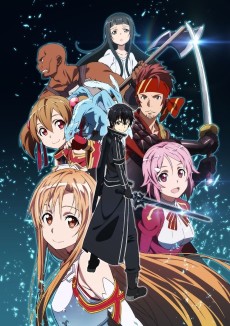
The emotional and narrative core of the 25-episode run rests on a distinct cast of survivors who approach the death game with varying philosophies. The primary protagonist is Kirito (the avatar name of Kazuto Kirigaya), a “solo player” who participated in the game’s exclusive beta testing phase. Possessing deep knowledge of the game’s mechanics and a natural aptitude for swordplay, Kirito initially distances himself from others to avoid the emotional burden of losing comrades. Known for his signature dark attire and exceptional dual-wielding capabilities, his journey is one of self-discovery, moving from an isolated survivor to a protector of those he holds dear.
Co-starring alongside him is Asuna (Asuna Yuuki), a highly skilled and fiercely independent swordswoman. Unlike Kirito, who initially operates in the shadows, Asuna rises through the ranks to become the sub-leader of the “Knights of the Blood Oath,” one of the most powerful clearing guilds in Aincrad. Armed with a rapier and blinding speed, Asuna is a formidable combatant who refuses to let the fear of death paralyze her. Her dynamic with Kirito evolves from professional rivalry to deep mutual trust, eventually blossoming into a profound romantic partnership that serves as the ultimate motivation for their survival.
Supporting these two are various characters who populate the world of Aincrad, including Klein, a friendly warrior who was among the first to receive guidance from Kirito on launch day, and Agil, a giant axe-wielder who runs a shop on the lower floors and advocates for cooperation among players. On the antagonistic side, the shadow of Akihiko Kayaba looms constantly over the cast, representing the cold, calculating intellect that turned an escapist fantasy into a lethal prison.
Episode Information
Spanning exactly 25 episodes, the pacing of the series is designed to showcase both the macro-level progression of the death game and the micro-level daily lives of those trapped within it. The narrative is structurally split, allowing viewers to witness the immediate fallout of the launch day, the desperate struggles of the middle tiers, and the climactic battles on the upper levels of Aincrad.
The early episodes function primarily as world-building vignettes, establishing the rules of the virtual space, the psychological toll of isolation, and the formation of the front-line clearing groups. As the episode count progresses, the focus shifts toward the growing partnership between Kirito and Asuna. The mid-series episodes brilliantly balance high-stakes boss battles with quieter, domestic moments where the characters attempt to find a semblance of normal life, marriage, and peace amidst the ongoing threat of death. The final block of episodes escalates the stakes to their absolute limit, bringing the deadly game of Aincrad to a dramatic conclusion while dealing with the lingering physical and psychological repercussions of the virtual prison in the real world.
Genres and Themes
As an anime that seamlessly weaves multiple genres together, the thematic depth of the series is a major contributor to its enduring legacy. Each of its four primary genres plays a specific role in shaping the narrative:
- Action: The combat in the series is fast-paced, visceral, and fraught with genuine tension. Because death in the game is permanent, every sword clash, boss attack, and defensive maneuver carries immense weight. The choreography of the battles emphasizes timing, sword skills, and team coordination.
- Adventure: The exploration of Aincrad’s 100 floors provides a constant sense of discovery. Each floor features distinct biomes, from lush forests and medieval cities to desolate, volcanic landscapes and icy caverns, capturing the classic spirit of RPG exploration.
- Fantasy: Stripped of traditional magic systems in its initial setting, the fantasy elements are grounded in the game’s mechanics—unique sword skills, crystal-based teleportation, and mythical beasts that inhabit the dungeons.
- Romance: Unlike many adventure series where romantic subplots remain unresolved, the relationship between Kirito and Asuna is central to the plot. Their love is portrayed as a sanctuary, offering them a reason to fight, survive, and preserve their humanity.
Beyond these genres, the series grapples with profound themes. The most prominent is the blurring of reality and virtuality. The show constantly asks: if a virtual space can evoke genuine fear, grief, love, and physical sensation, does it not become a “real” reality for those experiencing it? Additionally, the themes of isolation versus community highlight how human beings respond to crisis—some choose to isolate themselves to avoid pain, while others band together to build societies, economies, and support networks within the digital walls.
Production and Studio
The production of Sword Art Online was handled by A-1 Pictures, an elite studio with a stellar reputation for delivering high-quality, visually stunning adaptations. Released in 2012, the animation was ahead of its time, utilizing a vibrant color palette, crisp line art, and dynamic camera angles that perfectly captured the kinetic energy of virtual combat. The visual design of Aincrad, with its towering metallic architecture and detailed floor environments, remains a high-water mark for fantasy art direction.
A-1 Pictures paid meticulous attention to the design of the weapons and armor, ensuring that the gear looked functional yet stylishly heroic. The transition between peaceful, pastoral scenes and high-intensity battle sequences is handled with fluid frame rates and impressive particle effects, which represent the digital data of disintegrating monsters and glowing sword skills. This high production value, coupled with an atmospheric, orchestral musical score, elevated the raw emotional beats of the light novel source material, transforming it into a sensory-rich cinematic experience for television audiences.
Reception and Popularity
Upon its release in 2012, the series became an overnight global sensation, igniting passionate discussions across anime forums, social media platforms, and fan conventions. Its concept of being trapped in a deadly video game resonated deeply with an emerging generation of gamers and anime fans, perfectly capturing the zeitgeist of the early 2010s digital age. It was a massive commercial success, driving light novel sales to historic heights and establishing a massive, dedicated global fanbase.
On OniDex, the series holds a rating of 70. This score reflects a fascinating historical dichotomy. While the series is intensely loved for its premise, high-octane action, and central romance, it has also faced critical scrutiny regarding its narrative pacing, character power scaling, and the shifting dynamics of its second half. Despite this polarization, its cultural impact is undeniable. It acted as the primary gateway anime for millions of modern fans, revitalizing interest in the light novel industry and prompting production committees to greenlight countless similar fantasy adaptations throughout the decade.
Why Fans Love This Anime
The enduring appeal of the series lies in its ability to deliver ultimate wish-fulfillment while maintaining a high sense of drama. The concept of a brilliant, solo swordsman surviving on his own terms appeals to classic heroic archetypes. Fans are drawn to the sheer adrenaline of the boss battles, where the margin for error is non-existent, and the visual execution of Kirito’s unique dual-wielding skills remains iconic in the minds of viewers.
Furthermore, the emotional core of the romance between Kirito and Asuna is a massive draw. Unlike many fantasy narratives that tease romantic tension indefinitely, this series allows its main couple to commit to one another, build a life together within the game, and actively fight side-by-side as equals. This emotional anchor provides a comforting contrast to the bleak, survival-of-the-fittest environment of Aincrad, giving fans a relationship they can genuinely root for across all 25 episodes.
Final Thoughts
Whether viewed as a thrilling fantasy adventure or as a historical turning point for the anime industry, Sword Art Online remains a monumental achievement of the 2012 anime season. Across its 25 episodes, A-1 Pictures crafted a visually arresting world that captured the imaginations of millions. While its OniDex rating of 70 highlights the ongoing critical debates surrounding its writing, the series’ status as a cultural phenomenon is undisputed. It remains an essential watch for anyone wishing to understand the evolution of modern anime, offering a timeless story of survival, love, and the unbreakable human spirit trapped within a digital world.