Sword Art Online II
Overview
Sword Art Online II stands as a pivotal entry in the annals of virtual reality-themed storytelling. Released in 2014, this 24-episode sequel series expands the scope of its predecessor, shifting the narrative focus from the confines of a single death trap to the broader, more complex integration of virtual reality into civilian life and law enforcement. Produced by the acclaimed studio A-1 Pictures and adapted from the foundational Light Novel series, this installment navigates the precarious boundary between the digital realm and physical reality. With a rating of 66, the series remains a recognizable fixture in modern pop culture, exploring the psychological trauma of survivors and the evolving dangers of advanced immersive technology.
Story Summary
The narrative picks up one year after the harrowing conclusion of the initial SAO incident. The protagonist, Kirito, attempts to reintegrate into a semblance of normalcy, though the specter of his past actions continues to loom over him. This fragile peace is interrupted by Seijiro Kikuoka, an official from Japan’s Ministry of Internal Affairs and Communications. Kikuoka presents a chilling case: a mysterious assailant known as “Death Gun” is appearing in a gritty, high-stakes VRMMO called Gun Gale Online (GGO). The threat is far from mere virtual rivalry; players struck by Death Gun’s avatar in the game are found dead in the real world, seemingly killed by cardiac arrest.
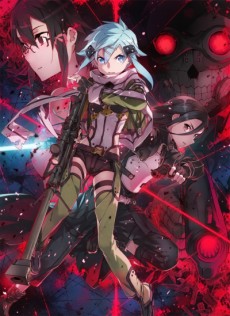
Reluctantly, Kirito is recruited to infiltrate GGO to investigate the technical and physical logistics behind these murders. Unlike the fantasy-inspired environment he is accustomed to, GGO is a desolate, wasteland-themed world dominated by firearms and heavy machinery. During his investigation, he crosses paths with Sinon, a skilled sniper who wields the massive Hecate II rifle. Together, they navigate the “Bullet of Bullets,” an elite tournament designed to determine the strongest gunner in the game. By participating in this tournament, Kirito hopes to draw out the elusive Death Gun and uncover the truth behind how a digital avatar can claim a human life. The story follows a tense, investigative path as Kirito must overcome his trauma and adapt to a new combat system to prevent further real-world casualties.
Main Characters
Kirito, the central figure of the series, undergoes significant character growth here. Forced out of his tactical comfort zone, he must abandon his traditional sword-play for specialized weaponry, reflecting his versatility as a seasoned VR player. His motivation is no longer survival for his own sake, but the preservation of justice and the protection of those who are being targeted by a malevolent force.
Sinon serves as the primary emotional anchor for the second half of the series. A formidable sniper, she operates with cold precision, yet her character is defined by a deep-seated fear rooted in a childhood incident. Her arc runs parallel to Kirito’s, as both characters struggle with the long-term psychological impacts of their past experiences. Her relationship with Kirito is one of mutual growth, as they challenge each other to confront their demons—whether they are on the battlefield or in their own minds.
Seijiro Kikuoka acts as the bridge between the VR world and the reality of the government, providing the necessary institutional context that elevates the series from a game-based story to a sci-fi thriller.
Episode Information
Sword Art Online II consists of 24 episodes. The pacing is carefully structured to accommodate the shift in settings and the introduction of new mechanics. The episodes are effectively divided into distinct narrative arcs, allowing for a comprehensive exploration of the GGO environment and the overarching mystery of the Death Gun. The status of the series is officially listed as FINISHED, providing a complete conclusion to the story arcs adapted from the source material during its original run.
Genres and Themes
As an entry in the Action, Adventure, Fantasy, and Sci-Fi genres, the series blends high-octane combat with deep, contemplative themes. The core of the story revolves around the intersection of technology and humanity.
A primary theme is the weight of trauma. The series does not shy away from the idea that virtual experiences carry real-world consequences, both physically and mentally. Characters are shown processing PTSD, and the narrative questions the morality of using virtual worlds as a space to escape or confront one’s past. Furthermore, the series explores the concept of identity; Kirito’s transformation from a sword-wielder to a gunner highlights the fluidity of digital avatars and the question of whether a person’s true self is revealed or obscured by their virtual choices. The juxtaposition of the gritty, gun-centric GGO environment against the high-fantasy elements of the series’ lore creates a unique contrast that forces the characters to evolve or be left behind.
Production and Studio
A-1 Pictures, the studio behind Sword Art Online II, brought a level of visual polish that defined the aesthetic of the series. Known for their high production values, A-1 Pictures utilized the transition from the lush landscapes of the earlier fantasy setting to the harsh, industrialized, and desaturated color palette of GGO to effectively communicate the shift in tone.
The animation quality is consistent, particularly in the rendering of complex gunplay and high-speed movement sequences. The studio’s reputation for handling action-oriented narratives is evident here, as they effectively capture the intensity of the “Bullet of Bullets” tournament. The sound design, particularly the auditory feedback of the weaponry, complements the animation to immerse the viewer in the dangerous, high-stakes atmosphere of the GGO world.
Reception and Popularity
Since its release in 2014, the series has maintained a strong presence in the anime industry. With a rating of 66, it reflects a broad audience reach, appealing to viewers who enjoy high-concept science fiction and character-driven drama. Fan reception has been largely positive regarding the exploration of characters like Sinon, whose backstory resonated deeply with viewers.
The transition to a Sci-Fi genre proved to be a popular decision, as it allowed the creative team to experiment with different combat mechanics that deviated from the standard RPG tropes seen elsewhere. The series is frequently cited in discussions regarding the most influential titles of the 2010s, solidifying its place in the history of the medium.
Why Fans Love This Anime
Fans are drawn to Sword Art Online II primarily for its ability to raise the stakes. By moving from a high-fantasy setting to a sci-fi thriller, the show keeps the audience on edge, ensuring that the tension remains palpable throughout all 24 episodes. The introduction of Sinon provided a compelling, complex character whose development is arguably the highlight of the series, drawing in viewers who appreciate strong character work.
Additionally, the “Bullet of Bullets” tournament arc satisfies the desire for well-choreographed action sequences. Watching Kirito adapt to a world where his signature move is no longer effective provides a sense of growth that is satisfying to witness. The blend of mystery, action, and psychological depth keeps the viewing experience fresh, proving that the series could evolve beyond its initial premise.
Final Thoughts
Sword Art Online II stands as a testament to the versatility of its source material and the technical expertise of A-1 Pictures. By successfully pivoting the series into a darker, more investigative territory, it managed to expand its universe without losing the core elements that fans appreciated in the first outing. The series serves as a bridge between light entertainment and deeper thematic exploration, tackling the psychological aftereffects of virtual reality in a way that feels both relevant and compelling. Whether viewed as an action-packed Sci-Fi thriller or a deep dive into the trauma of its leads, the series remains an essential watch for anyone interested in the evolution of the genre. Its legacy as a FINISHED work ensures that it will remain a cornerstone of 2014’s anime landscape, continuing to be analyzed and enjoyed by fans for years to come.