
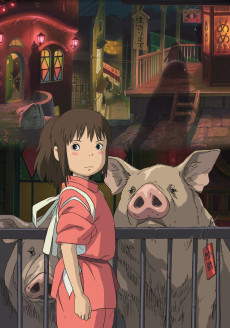
Spirited Away
Overview
Spirited Away, released in 2001, stands as a monumental achievement in the history of global animation. Produced by the legendary Studio Ghibli, this film serves as the pinnacle of hand-drawn cinematic storytelling, blending folkloric wonder with a deeply grounded exploration of childhood development. With a rating of 86, it has solidified its place not just as a landmark in the medium of anime, but as a quintessential piece of world cinema. As an original work, the film relies entirely on the creative vision of its creators rather than adapting pre-existing literary or manga material, allowing for a pure, unfiltered narrative experience that has resonated with audiences for over two decades. The status of the production is finished, remaining a singular, self-contained masterpiece that requires no sequels or additions to enhance its profound legacy.
Story Summary
The narrative follows 10-year-old Chihiro Ogino, a young girl caught in the anxiety of moving to a new home. During the transit to their new residence, Chihiro and her parents take a wrong turn, finding themselves before a mysterious, seemingly deserted theme park. Driven by curiosity, the family explores the site, unaware that they have crossed the threshold into a realm inhabited by spirits, deities, and supernatural entities that remain dormant during the daylight hours.
As the sun begins to set, the boundary between the mundane and the supernatural thins. Chihiro discovers that her parents, lured by the scent of food in a desolate restaurant, have consumed meals meant for spirits. Their gluttony results in a grotesque transformation; they are turned into pigs, effectively stripping them of their humanity. Simultaneously, a vast, insurmountable sea manifests, severing the path back to the human world and leaving Chihiro stranded and vulnerable.
Amidst her terror, she encounters a mysterious boy named Haku. He recognizes Chihiro from her past and offers a lifeline, albeit a demanding one. To survive in this volatile realm and eventually secure the freedom of her parents, Chihiro must forfeit her name and identity, accepting a position at a massive, ornate bathhouse frequented by the spirits. Over the course of her employment, she must navigate the complex hierarchy of the bathhouse, confront the formidable sorceress Yubaba, and harness an internal courage she never knew she possessed. The story is a quest for identity, survival, and the restoration of familial bonds in a land that is as perilous as it is enchanting.
Main Characters
Chihiro Ogino: The protagonist, initially depicted as sullen and apprehensive, forced into a radical transformation. As she navigates the bathhouse, she evolves from a timid child into a resilient young person capable of profound compassion and brave decision-making.
Haku: A enigmatic figure who works within the bathhouse. He is Chihiro’s primary guide and protector. His knowledge of the spirit realm and his lingering connection to Chihiro provide the necessary friction to move the plot forward, as he hides secrets regarding his true nature and his history.
Yubaba: The formidable proprietor of the bathhouse. She is a sorceress who controls the destiny of all who enter her establishment. She is a figure of intense authority who demands efficiency and hard work, serving as both a mentor and a primary antagonist.
No-Face: A lonely, spectral being who becomes fascinated with Chihiro. His presence acts as a thematic catalyst, representing the dangers of desire and the emptiness that can come from trying to fill one’s life with superficial acquisitions.
Episode Information
As a feature-length cinematic production, Spirited Away consists of 1 episode. Despite its singular format, the pacing and narrative structure are meticulously crafted to provide the arc and emotional resolution typically found in multi-episodic storytelling. The release year of 2001 marked a turning point in the distribution of high-quality animation, bringing the singular vision of the studio to a global audience in a compressed, impactful timeframe.
Genres and Themes
Spirited Away falls under the genres of Adventure, Drama, Fantasy, and Supernatural. While these categories provide a structural framework, the film transcends them by interweaving several sophisticated themes:
The transition from childhood to adolescence is central to the film. Chihiro’s journey represents the shedding of dependency and the realization of one’s own agency. By losing her name, she is forced to define herself through her actions rather than her background.
The film serves as a critique of consumerism and greed. The transformation of Chihiro’s parents into pigs is a visceral manifestation of gluttony, and the bathhouse itself functions as a complex economy where the pursuit of wealth can lead to moral decay.
The environmental connection is palpable. The spirit world is presented as a place where the natural and supernatural are inseparable, and the impact of the human world on nature is reflected in the suffering of the spirits Chihiro encounters.
Production and Studio
Studio Ghibli’s reputation for excellence is the cornerstone of this film’s success. The studio, known for its dedication to traditional, hand-drawn animation, utilized the film to display an unparalleled level of detail. Every frame of the bathhouse, the sprawling fields, and the spirit manifestations was crafted with an emphasis on texture and lighting.
The animation quality is characterized by fluid motion and a sense of weight. In an era where digital tools were beginning to take precedence, the studio opted for a labor-intensive approach that imbued the spirit world with a grounded, physical reality. This commitment to the craft ensures that, even decades after its 2001 release, the visual language of the film remains timeless and immune to the aging processes that affect many other works of its era.
Reception and Popularity
The reception of Spirited Away was immediate and historic. It achieved a rare status as both a critical darling and a massive commercial success. Its rating of 86 underscores a consistent appreciation from audiences and critics who recognize the depth of the screenplay and the technical brilliance of the production.
The popularity of the film is not merely a result of its visual splendor but also the universal nature of its story. It bypassed the limitations of cultural barriers by tapping into primal fears and fundamental human experiences—the fear of abandonment, the confusion of adulthood, and the power of memory. It turned the concept of an “original” story into a global brand, proving that non-franchise, standalone narratives could command the attention of the worldwide box office.
Why Fans Love This Anime
Fans are consistently drawn to the film due to its immersive atmosphere. The world-building is unparalleled, with every spirit, worker, and customer in the bathhouse feeling like a fully realized character with a history. There is a sense of mystery that persists throughout the viewing; the audience is never fully explained the rules of the world, mirroring Chihiro’s own experience of learning by doing.
Furthermore, the character growth is exceptionally rewarding. Audiences feel a genuine sense of victory when Chihiro overcomes the challenges set before her. The bond between Chihiro and Haku is often cited as one of the most poignant relationships in animation, rooted in mutual support and a quiet, profound recognition of one another. The film respects the intelligence of its audience, never resorting to overt exposition to explain the emotional stakes.
Final Thoughts
Spirited Away remains a cornerstone of the anime industry. Its existence proves that the Adventure and Fantasy genres, when treated with the gravity of a Drama, can produce something truly transformative. By focusing on a single, 1-episode journey, the film avoids the pitfalls of filler or overextension, keeping its narrative trajectory tight and meaningful.
The legacy of the 2001 release continues to influence the medium, serving as a benchmark for what can be achieved through artistic integrity and a steadfast commitment to story. Whether through the lens of its supernatural setting or its grounded, human-centric themes, the film offers a unique experience that invites viewers to return again and again. For any student of animation or casual fan of high-quality cinema, it is an essential viewing experience that captures the heart of what it means to grow up, to let go, and to find one’s way back home.