
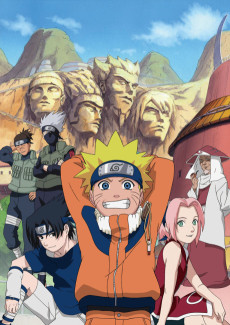
Naruto
Overview
Originally premiering in the autumn of 2002, the television adaptation of Naruto stands as one of the most influential and historically significant productions in the history of global animation. Sourced directly from a highly acclaimed MANGA, this landmark series was brought to life by the legendary Studio Pierrot. Spanning a total of 220 episodes during its initial run, the series has officially reached the status of FINISHED, cementing its legacy as a complete and historically preserved epic. On the OniDex database, the series holds a distinguished Rating of 80, reflecting its enduring quality, narrative depth, and massive appeal across generations of viewers. Classified under the multi-faceted genres of Action, Adventure, Comedy, Drama, Fantasy, and Supernatural, the series represents a masterclass in long-form storytelling, worldbuilding, and character development that redefined the landscape of broadcast television in the early 2000s.
Story Summary
The narrative of Naruto is set in a meticulously constructed fantasy world populated by hidden ninja villages, where military might is wielded through spiritual energy and specialized combat techniques. The story begins in Konohagakure, the Hidden Leaf Village, which is recovering from a historic tragedy. Moments prior to the birth of the protagonist, a catastrophic force known as the Kyuubi—the monstrous Nine-tailed Fox—attacked the village, causing widespread destruction and loss of life. In a desperate bid to save his people, the leader of the village, the revered 4th Hokage, sacrificed his own life to seal the untamable beast inside a newborn infant named Naruto Uzumaki.
Growing up without parents and bearing the spiritual burden of the monster that nearly destroyed his home, Naruto is deeply shunned and ostracized by the villagers. Ignorant of the truth of his condition but deeply feeling the weight of their isolation, Naruto adopts a hyperactive, knuckle-headed persona, constantly playing pranks to force the village to acknowledge his existence. Despite the heavy prejudice he faces, Naruto harbors a grand, seemingly impossible ambition: to become the Hokage, the supreme leader and strongest ninja of Konohagakure, thereby earning the unconditional respect of his peers. As he enrolls in the ninja academy, Naruto embarks on a tumultuous journey where he meets many friends and foes, slowly unlocking the power sealed within him while confronting the dark political realities of the ninja world.
Main Characters
The emotional core of the series lies within its exceptional character writing, driving a narrative defined by growth, conflict, and personal identity. The most notable characters include:
- Naruto Uzumaki: The hyperactive, orange-clad protagonist who holds the Kyuubi sealed within him. He is defined by his unwavering resolve, empathy, and his signature catchphrase promising never to go back on his word. His struggle for recognition serves as the driving force of the entire plot.
- Sasuke Uchiha: Naruto’s quiet, incredibly talented rival and teammate. Driven by a dark past and a burning desire for vengeance against his own brother, Sasuke represents the tragic counterpoint to Naruto’s optimistic pursuit of acceptance.
- Sakura Haruno: The third member of their core ninja squad. While initially lacking the raw power of her teammates, Sakura possesses high intelligence and precise control over her internal energy, striving to find her own identity and strength amidst her peers.
- Kakashi Hatake: The elite, laid-back, and mysterious mentor assigned to guide the young trio. Known for wearing a mask that covers most of his face, Kakashi is a highly skilled veteran whose tragic past shapes his strict philosophy on teamwork.
- The 4th Hokage: Though deceased prior to the main events of the story, his legacy as the savior of Konohagakure and the one who sealed the Kyuubi inside Naruto casts a massive shadow over the political and emotional landscape of the village.
Episode Information
The series consists of exactly 220 episodes, structured to take viewers through the foundational years of Naruto’s training and his initial missions as a licensed ninja. The adaptation model utilized for this television series was designed to run concurrently with the publication of the original MANGA. This approach resulted in several major narrative blocks. The early portions of the 220 episodes focus on crucial canon arcs, including the introduction of the protagonist, the high-stakes mission in the Land of Waves, the highly acclaimed Chunin Exams arc, the search for the new village leader, and the emotionally charged pursuit of a defecting comrade.
To allow the original author’s source material time to progress, the latter segment of the 220 episodes transitioned into episodic, original television adventures. These episodes expanded upon the wider ninja world, allowing various supporting characters from Konohagakure to take center stage alongside Naruto. With its status now set to FINISHED, the entire 220-episode run serves as a comprehensive time capsule of early-2000s anime production, showcasing the evolution of episodic pacing and structural adaptation during a golden era of television broadcasts.
Genres and Themes
The narrative of Naruto is highly celebrated for the seamless integration of its primary genres: Action, Adventure, Comedy, Drama, Fantasy, and Supernatural. The Action and Fantasy components are expressed through a deeply detailed combat system centered around “chakra”—the physical and spiritual energy that ninjas manipulate to perform supernatural techniques (jutsu). The Adventure element is realized as characters travel beyond the borders of Konohagakure, discovering neighboring lands with distinct cultural and military identities. The series balances intense Drama with lighthearted Comedy, utilizing physical humor, eccentric character quirks, and comedic misunderstandings to temper the show’s darker thematic elements.
Thematic depth is where the series truly shines. Key themes explored throughout the 220 episodes include:
- The Pain of Isolation: Through the character of Naruto, the series examines the psychological damage caused by social exclusion and loneliness, contrasting it with the healing power of empathy and companionship.
- Fate vs. Personal Agency: The narrative consistently questions whether a person’s destiny is predetermined at birth or if it can be reshaped through sheer willpower, hard work, and determination.
- The Cycle of Hatred: The world of Naruto is one plagued by perpetual military conflict. The story explores how historical grievances, state-sanctioned violence, and personal loss perpetuate cycles of revenge, and how true peace requires breaking these cycles through understanding rather than force.
Production and Studio
The production of Naruto was handled by the esteemed Studio Pierrot, an animation studio founded in 1979 with a legendary reputation for handling long-running, action-packed adaptations. Launching the project in 2002, Studio Pierrot faced the massive undertaking of translating the detailed, highly kinetic artwork of the MANGA source into a weekly animated television format. Under their stewardship, the series established an iconic visual identity characterized by vibrant color palettes, highly expressive character designs, and fluidly choreographed martial arts sequences.
The animation quality of the series is historically noteworthy. While maintaining a consistent baseline for weekly television production, Studio Pierrot allocated top-tier animators and directors to key emotional and physical climaxes. These select episodes featured experimental art styles, advanced cinematography, and incredibly fluid key animation that pushed the boundaries of what was thought possible for long-running television projects in the early 2000s. Furthermore, the production was elevated by an iconic musical score that blended traditional Japanese instruments, such as the shamisen and shakuhachi, with modern rock and metal instrumentation, creating an atmospheric, unforgettable soundscape that became synonymous with the identity of the franchise.
Reception and Popularity
Upon its release in 2002, Naruto achieved immediate commercial and critical success, rapidly ascending to become a defining cultural phenomenon of its era. This widespread acclaim is reflected in its strong OniDex Rating of 80, a score that indicates its enduring legacy among both historical critics and modern database editors. The series played an instrumental role in expanding the global footprint of Japanese animation, serving as an accessible gateway series for millions of international viewers who were introduced to the medium through Naruto’s journey.
The cultural impact of the series cannot be overstated. From the widespread adoption of its unique running style to the mainstream recognition of its visual iconography—such as the forehead protectors worn by the ninja of Konohagakure—the franchise successfully permeated global pop culture. It transformed Studio Pierrot into an international household name and solidified the original MANGA’s status as one of the most successful intellectual properties in entertainment history. Decades after its 2002 premiere, the series continues to be discussed, analyzed, and celebrated by academics, journalists, and fans alike.
Why Fans Love This Anime
The enduring devotion of the global fanbase can be attributed to several core elements that make the viewing experience highly resonant. First and foremost is the profound relatability of the protagonist. Naruto Uzumaki’s journey from a hated, untalented outcast to a respected hero of his village mirrors universal human desires for belonging, validation, and self-improvement. Watching his slow, hard-fought progression over the course of 220 episodes creates an intense emotional investment that few shorter series can replicate.
Additionally, the meticulous worldbuilding and the intricate rules of combat captivate viewers. The series establishes a logical system of elements, hand signs, and tactical strategies that make battles intellectual puzzles rather than simple displays of raw power. Fans also laud the psychological complexity of the antagonists. Rather than presenting purely evil villains, the series takes great care to illustrate the personal tragedies and philosophical motivations that drive its antagonists, often forcing viewers to empathize with their pain even as they oppose the heroes.
Final Thoughts
As a finished masterwork of historical significance, Naruto remains an essential watch for any serious enthusiast of the medium. The collaboration between the original MANGA creator and the creative team at Studio Pierrot produced a timeless epic that brilliantly captures the essence of youth, perseverance, and human connection. Boasting a well-deserved Rating of 80, its combination of top-tier action choreography, profound thematic resonance, and unforgettable character arcs ensures that the legacy of the Hidden Leaf’s most knuckle-headed ninja will endure for generations to come.