
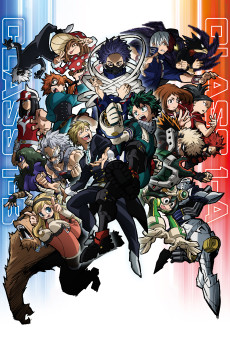
My Hero Academia Season 5
Overview
My Hero Academia Season 5 stands as a pivotal chapter in the long-running saga of U.A. High School’s burgeoning hero population. Released in 2021, this installment continues the adaptation of the beloved MANGA source material, further cementing the franchise as a modern pillar of the action and sci-fi genres. With a rating of 73, the season maintains the high-octane energy and character-driven narrative depth that followers have come to expect. Produced by the acclaimed studio bones, this 25-episode season serves as a vital bridge between the high-stakes conflicts of the past and the darker, more complex trials that lie ahead for its cast. As a FINISHED production, it offers a complete, cohesive arc that explores the competitive spirit of youth, the necessity of personal growth, and the shifting landscape of a society dependent on superhuman icons.
Story Summary
The core narrative of My Hero Academia Season 5 is defined by the Joint Training Battle, an unprecedented curriculum exercise designed to foster growth through direct competition. The premise centers on the rivalry between Class 1-A and Class 1-B, both of whom have been honing their quirks under extreme pressure. Unlike previous tournament-style arcs, this sequence focuses on team-based synergy and tactical adaptability.
The stakes are raised significantly by the inclusion of Hitoshi Shinso, a student from the General Department who is eager to transfer into the hero course. Shinso is tasked with competing on both sides, acting as a wildcard whose cerebral “Brainwashing” quirk forces every participant to re-evaluate their combat strategy. As the teams engage, they are forced to confront their inherent weaknesses while simultaneously discovering new, latent strengths within their powers.
The story does not merely dwell on the combat; it captures the nuanced shifts in the students’ psychological landscapes. As each match progresses, the showdown becomes a true toss-up, with victory requiring more than raw power—it necessitates camaraderie, unconventional thinking, and a profound understanding of one’s own limits. Beyond the classroom, the season delves into the lingering consequences of past battles and the weight of the legacy that these young heroes are destined to inherit.
Main Characters
The ensemble cast of My Hero Academia Season 5 is vast, but the narrative spotlight is shared among several key figures who drive the developmental arcs of the season:
Izuku Midoriya: As the protagonist, Midoriya continues to navigate the immense pressure of his role. In this season, his focus shifts toward mastering the complexities of his heritage and his quirk, often serving as the strategic anchor for Class 1-A.
Hitoshi Shinso: A standout addition to the training exercises, Shinso represents the underdog archetype. His struggle to prove himself worthy of the hero course provides a unique perspective on the rigidity of the school system and the evolution of combat tactics.
Class 1-B Students: Often overlooked in previous installments, characters such as Neito Monoma and Itsuka Kendo receive significant screen time. Their tactical competence and unique quirks serve as the perfect foil to the more flashy abilities of Class 1-A.
Katsuki Bakugo and Shoto Todoroki: While they remain central, their development in this season is defined by their capacity for teamwork. Watching these individualistic powerhouses learn to rely on others highlights the shift from solitary fighting to coordinated hero work.
Episode Information
My Hero Academia Season 5 consists of 25 episodes, a standard count that allows for a comprehensive exploration of the training arcs and the subsequent character-focused interludes. The pacing of these 25 episodes is deliberately calculated to provide each match in the joint training competition enough room to breathe. By dedicating substantial time to the mechanical and strategic failures of the teams, the season ensures that every victory feels earned rather than gifted. The structure of the season follows the source MANGA closely, maintaining a consistent rhythm that satisfies those looking for immediate action while providing the necessary narrative buildup for the more emotional beats that occur in the latter half of the season.
Genres and Themes
As a multifaceted series, My Hero Academia Season 5 skillfully balances its core genres: Action, Adventure, Comedy, and Sci-Fi. The Sci-Fi elements are grounded in the mechanics of quirks—a scientific exploration of superhuman physiology—which allows for creative combat scenarios that rely on biology and physics rather than arbitrary magic.
The themes explored are deeply resonant with a younger audience yet complex enough for seasoned viewers. Central to the season is the theme of institutional competition. By pitting Class 1-A against Class 1-B, the narrative asks what it means to be a “hero” in a competitive environment. Does excellence require the suppression of others, or does it require lifting them up?
Additionally, the theme of “Overcoming Limits” is omnipresent. Many characters reach a plateau in their training, and the season suggests that true improvement only occurs when one is forced to adapt to a scenario that does not play to their specific strengths. This growth mindset is paired with the societal theme of the “Next Generation,” where the characters must decide what kind of legacy they will leave behind in a world where heroes are becoming as much a brand as they are protectors.
Production and Studio
The studio bones has long been synonymous with high-quality animation, and their work on My Hero Academia Season 5 is a testament to their technical prowess. Studio bones is widely respected in the industry for their ability to maintain fluid animation during the most frantic, high-intensity sequences.
In this season, the animation quality is particularly notable during the skirmishes. The studio makes expert use of kinetic camera movements to convey the impact of quirks, ensuring that even the most obscure or subtle abilities feel weighty and significant. The art direction respects the aesthetic established in the MANGA, translating the creator’s panel work into vibrant, motion-filled animation. The studio’s reputation for consistency is upheld here, as the balance between complex character expressions and dynamic battlefield spectacle is maintained without sacrificing clarity. This dedication to quality is a primary reason why the production values remain a benchmark for the medium.
Reception and Popularity
Since its release in 2021, My Hero Academia Season 5 has maintained a strong foothold in the global consciousness of fans. With a rating of 73, the season is frequently praised for its deeper dive into the secondary cast, which had long been requested by the fanbase.
Critically, the reception has been largely positive regarding the transition from traditional school drama to a more mature look at what it takes to survive in a hero-centric society. While some viewers initially missed the explosive, life-or-death stakes of previous seasons, the general consensus is that the Joint Training arc provided necessary world-building that paid off in the season’s final episodes. The popularity of the season is buoyed by its accessibility; it serves as a great entry point for those interested in character-driven ensemble stories, yet it offers enough depth to keep long-term readers of the source material engaged. The online discourse surrounding the season was particularly focused on character growth, with many segments of the community celebrating the increased agency given to Class 1-B.
Why Fans Love This Anime
Fans are drawn to My Hero Academia Season 5 for several distinct reasons. First and foremost is the character chemistry. Seeing the familiar faces of Class 1-A engage in tactical, thought-out battles with the students of Class 1-B allows for interactions that viewers would never have seen otherwise. It strips away the plot armor often associated with main characters and places them in a fair playing field.
Secondly, the comedy provides a much-needed levity that contrasts with the heavier, sci-fi themes of the show. The banter between classmates, the exaggerated reactions to defeats, and the lighthearted rivalry between the two classes keep the tone from becoming overly oppressive.
Finally, the sense of progression is addictive. Fans feel as though they are part of the school curriculum, watching the students evolve from inexperienced novices into competent, strategic thinkers. The feeling of “witnessing” the next generation of heroes grow up is a core component of the fandom’s loyalty, and this season offers arguably the most transparent look at that growth in the entire franchise.
Final Thoughts
My Hero Academia Season 5 stands as a sophisticated entry in the franchise. By shifting the focus from external villain-centric threats to the internal development of its students, it provides a crucial look at the mechanics of heroism. With its 25-episode duration, it captures the essence of the MANGA and elevates it through the impeccable production standards of studio bones.
While it retains the action-adventure spirit that popularized the series, it does not shy away from the intellectual and emotional hurdles that come with the path of a hero. Whether you are a newcomer to the series or a long-time devotee, this season offers a complete and rewarding narrative experience that emphasizes the importance of rivalry, growth, and the relentless pursuit of self-improvement. It remains a finished, polished work that captures the unique blend of heart, humor, and high-stakes science fiction that has made this story a staple of modern culture. As we reflect on this chapter, it is clear that the journey of these young heroes is as compelling as ever, proving that the true strength of a hero lies not just in their quirk, but in their capacity to learn from their opponents and rise to every challenge presented.