
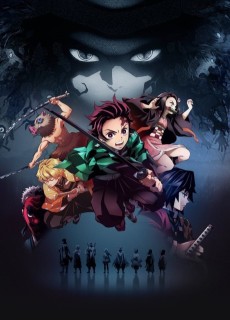
Demon Slayer: Kimetsu no Yaiba
Overview
Welcome to the official OniDex database entry for Demon Slayer: Kimetsu no Yaiba. Released in the landmark anime year of 2019, this production represents one of the most significant cultural milestones in modern animation history. Adapted from a celebrated MANGA source, the series arrived on television screens and quickly transformed from a highly anticipated adaptation into a global phenomenon. Produced by the critically acclaimed studio ufotable, this initial season consists of 26 episodes and holds a database status of FINISHED.
Currently holding an exceptional OniDex user rating of 83, this masterpiece spans multiple popular genres, including Action, Adventure, Drama, Fantasy, and Supernatural. It is a series that masterfully balances historical atmosphere with high-octane fantasy elements, setting a new benchmark for what modern television animation can achieve. Below, our editorial team has compiled a comprehensive historical and critical analysis of the series, detailing its narrative foundation, character roster, thematic depth, production secrets, and cultural impact.
For database editors, researchers, and casual fans alike, this profile serves as the definitive reference point for the 2019 television broadcast that permanently altered the global anime landscape.
Story Summary
Set during the transitionary and atmospheric Taisho Period of Japan, Demon Slayer: Kimetsu no Yaiba introduces us to a world where humanity coexists in constant, silent terror with bloodthirsty, nocturnal demons. The narrative centers on Tanjiro Kamado, a kindhearted, hardworking boy who lives high in the snow-covered mountains. Following the untimely death of his father, Tanjiro shoulders the responsibility of supporting his family by making grueling journeys down the mountain to sell charcoal in the local village. Despite their impoverished circumstances, the Kamado family enjoys a peaceful, warm, and loving existence.
This domestic tranquility is shattered in a single night. Upon returning home after being forced to stay the night in a villager’s hut due to warnings of man-eating demons lurking in the dark, Tanjiro discovers a horrific scene of utter devastation. His mother and younger siblings have been mercilessly slaughtered, their blood staining the pristine white snow. The sole survivor of this grim massacre is his younger sister, Nezuko Kamado. However, Tanjiro’s relief is short-lived; Nezuko has been infected with demonic blood and has transformed into a feral, flesh-craving demon herself.
Faced with this unimaginable tragedy, Tanjiro refuses to abandon his sister. When a stoic warrior attempts to execute Nezuko, Tanjiro defends her, displaying a spark of tactical ingenuity and relentless resolve. Recognizing the sibling’s unique bond—and the shocking reality that Nezuko retains a protective instinct over her brother despite her demonic transformation—the warrior directs Tanjiro to seek out a retired master hidden in the wilderness.
This marks the beginning of Tanjiro’s arduous journey. He resolves to become a “demon slayer” under the tutelage of the Water Breathing master, Sakonji Urokodaki. Tanjiro must endure years of near-impossible physical and mental conditioning on the oxygen-deprived slopes of Mt. Sagiri. His ultimate goals are twofold: to find a cure that can restore Nezuko to her human form, and to track down and destroy the progenitor demon responsible for the annihilation of his family. The 26 episodes of the 2019 season chronicle his training, his hazardous initiation into the Demon Slayer Corps during the Final Selection, and his early missions as a licensed swordsman traveling across Taisho-era Japan.
Main Characters
The success of the narrative rests heavily on its meticulously developed cast of characters, each bringing distinct emotional weight, combat styles, and philosophical outlooks to the supernatural conflict.
- Tanjiro Kamado: The primary protagonist of the series. Tanjiro is defined by his profound empathy, an attribute that remains unshaken even in the face of absolute horror. He possesses an incredibly acute sense of smell, allowing him to track demons, sense human emotions, and detect the “opening thread” in combat—a visual representation of a split-second gap in an enemy’s defense. Armed with a black Nichirin Blade and utilizing the fluid motions of Water Breathing, Tanjiro stands out as a protagonist who mourns the tragic loss of humanity in the monsters he is forced to execute.
- Nezuko Kamado: Tanjiro’s beloved younger sister. Despite being turned into a demon, Nezuko defies the laws of nature through sheer willpower and psychological conditioning, choosing to protect humans rather than feed on them. To suppress her demonic urges and prevent her from accidentally biting anyone, she constantly wears a bamboo muzzle. In battle, she utilizes devastating physical kicks and can manipulate her own demonic blood, expanding her power to protect her brother in times of dire need.
- Zenitsu Agatsuma: A cowardly young man who was forced to join the Demon Slayer Corps to pay off a debt. Zenitsu suffers from severe self-doubt and frequently panics, screaming in terror when confronted by supernatural threats. However, when his fear reaches an absolute peak, he passes out, entering a state of somnambulism. In this sleeping state, Zenitsu accesses the absolute pinnacle of Thunder Breathing, executing lightning-fast, single-stroke sword strikes that can decapitate demons before they can even register his movement.
- Inosuke Hashibira: A wild, hot-blooded, and boisterous young man who was raised by wild boars in the mountains. Inosuke wears a hollowed-out boar’s head mask to conceal his surprisingly feminine facial features. He fights using a self-taught style known as Beast Breathing, dual-wielding chipped, serrated Nichirin Blades. Inosuke is driven by an intense desire for competition and self-improvement, initially clashing with Tanjiro before developing a deep, loyal camaraderie with him.
- Giyu Tomioka: The stoic and reserved Water Hashira (one of the elite swordsmen of the Demon Slayer Corps). Giyu is the first Demon Slayer Tanjiro encounters. Though initially prepared to execute Nezuko, he is the one who recognizes the potential of the siblings’ bond and spares her life, sending them to his former mentor, Sakonji Urokodaki.
- Muzan Kibutsuji: The primary antagonist of the franchise. Muzan is the very first demon to exist and the sole progenitor of all other demons. He is cold, ruthless, and obsessed with achieving absolute perfection and immortality. Muzan is the entity responsible for the slaughter of the Kamado family and the transformation of Nezuko, making him the ultimate target of Tanjiro’s quest.
Episode Information
The 2019 television broadcast of Demon Slayer: Kimetsu no Yaiba is structured as a 26-episode continuous run. This format allowed the production team to carefully construct a narrative that respects the pacing of its source material while maximizing the dramatic tension of each individual story arc.
The first season is divided into several foundational story arcs:
- The Final Selection Arc (Episodes 1–5): This introductory segment establishes the tragedy of the Kamado family, Tanjiro’s encounter with Giyu Tomioka, his multi-year training on Mount Sagiri under Sakonji Urokodaki, and his harrowing trial during the Final Selection on Mt. Fujikasane to earn official entry into the Demon Slayer Corps.
- First Mission Arc (Episodes 6–7): Newly licensed as a Demon Slayer, Tanjiro travels to a town where young girls are mysteriously vanishing at night, marking his first official encounter with a bloodthirsty demon utilizing supernatural blood arts.
- Asakusa Arc (Episodes 8–10): Tanjiro travels to the sprawling, modern metropolis of Asakusa, Tokyo, where he unexpectedly crosses paths with Muzan Kibutsuji. Here, he aligns with friendly, non-violent demons who seek a cure for the demonic condition, setting up a clash against Muzan’s deadly assassins.
- Tsuzumi Mansion Arc (Episodes 11–14): Tanjiro is dispatched to a bizarre, shifting mansion controlled by a drum-playing demon. It is during this arc that he teams up with his future travel companions, Zenitsu Agatsuma and Inosuke Hashibira, establishing their chaotic but endearing group dynamic.
- Natagumo Mountain Arc (Episodes 15–21): The undisputed climax of the 2019 season. The trio of slayers is sent into a terrifying, web-choked forest ruled by a monstrous family of spider demons. This arc features the legendary Episode 19, which achieved universal critical acclaim for its groundbreaking cinematic presentation, emotional weight, and musical integration.
- Rehabilitation Training Arc (Episodes 22–26): Following the brutal battles of Natagumo Mountain, the recovering slayers are brought to the Butterfly Mansion. Here, they undergo rigorous physical rehabilitation, refine their breathing techniques, and are formally introduced to the upper echelon of the Demon Slayer Corps—the Hashira—setting the stage for future conflicts.
The 26-episode runtime concludes with a status of FINISHED, perfectly wrapping up the introductory phases of Tanjiro’s journey while leaving audiences clamoring for the next chapter of the adaptation.
Genres and Themes
By dissecting the categorized genres of Demon Slayer: Kimetsu no Yaiba, we gain a clearer understanding of why the narrative resonates so deeply with audiences worldwide.
Action and Adventure
As an Action and Adventure series, the show excels at delivering beautifully choreographed, high-stakes encounters. The adventure element takes the cast from isolated, snowy wildernesses to bustling, early-twentieth-century urban centers, showcasing a country undergoing rapid modernization. The action is defined by the unique combat mechanics of Breathing Techniques, which allow normal humans to push their physical limits to match the biological superiority of demons.
Drama and Supernatural
The Drama and Supernatural elements provide the narrative’s emotional core. Rather than treating the supernatural creatures as mere monsters to be vanquished, the story continuously emphasizes the tragic loss of humanity. Demons are portrayed as tragic, broken individuals who were once vulnerable humans pushed to despair. The drama stems from the profound grief of the survivors and the deep, unbreakable bond of love between Tanjiro and Nezuko, which serves as a beacon of hope in a dark, cruel world.
Core Themes
The major thematic elements of the series can be categorized as follows:
- The Resilience of the Human Spirit: The series repeatedly demonstrates that while demons possess supernatural strength, rapid regeneration, and immortality, humans possess an indomitable will, love, and the ability to pass their legacy down through generations.
- Family and Kinship: The sibling bond between Tanjiro and Nezuko is the driving force of the entire series. It represents absolute loyalty, trust, and the rejection of the cold, isolated existence that demonhood represents.
- Empathy in the Face of Cruelty: Tanjiro’s capacity for kindness is his greatest strength. He does not hesitate to execute a demon to protect innocent lives, but he will hold their hand as they turn to ash, acknowledging their pain and humanity.
Production and Studio
The technical production of the 2019 television series is a masterclass in modern animation, handled entirely by the prestigious studio ufotable. Founded with a reputation for meticulous detail and cutting-edge digital compositing, the studio utilized its entire arsenal of creative talents to bring the manga’s unique art style to life.
One of the most notable aspects of the production is the seamless integration of traditional hand-drawn 2D character animation with highly sophisticated 3D computer-generated environments. This hybrid approach allowed the directors to utilize dynamic, sweeping camera movements during intense battle sequences, moving through complex physical spaces (such as the rotating rooms of the Tsuzumi Mansion or the dense, multi-layered forest of Natagumo Mountain) while maintaining flawless character proportions and sharp line art.
The visual depiction of the Breathing Techniques is another artistic triumph. Rather than using standard energy blasts, ufotable chose to render the water and lightning effects using traditional Japanese artistic styles. The Water Breathing techniques are explicitly modeled after classic Ukiyo-e woodblock prints, featuring bold, stylized blue waves with frothy white foam that contrast beautifully against the dark, gritty realism of the show’s backgrounds.
The auditory landscape is equally brilliant. The series features a magnificent, custom-tailored orchestral score composed by Go Shiina and Yuki Kajiura. Their compositions blend traditional Japanese instruments—such as the shakuhachi flute, koto, and taiko drums—with grandiose symphonic arrangements and haunting vocal choruses. This meticulous attention to audio-visual synergy is best exemplified in the climax of Episode 19, where the animation, sound design, vocal performances, and insert song “Kamado Tanjiro no Uta” align perfectly to create a stunning cinematic crescendo.
Reception and Popularity
Upon its debut in 2019, the series was met with positive reviews, but it was the mid-season transition and the monumental release of Episode 19 that propelled the show into an unprecedented tier of global popularity. The OniDex database rating of 83 reflects a consistently high level of critical and fan appreciation that has endured long after the broadcast reached its status of FINISHED.
The popularity of the anime had an immediate, explosive impact on the entire franchise. The original manga saw an unprecedented surge in sales, breaking historical publishing records and dominating sales charts worldwide. This phenomenon, often referred to by industry analysts as a textbook example of a perfect adaptation, demonstrated how a high-quality animated production could revitalize and amplify its source material.
The cultural impact was immense. The theme song “Gurenge” by LiSA became a massive commercial hit, topping charts and being performed at major cultural events. Characters like Tanjiro and Nezuko became recognizable household names, appearing on public transport, in safety campaigns, and as major merchandise fixtures. The series successfully bridged the gap between dedicated animation enthusiasts and the general public, appealing to various age demographics due to its compelling characters, emotional depth, and universally appealing themes of family and perseverance.
Why Fans Love This Anime
There are several key reasons why Demon Slayer: Kimetsu no Yaiba has earned such a devoted global following and maintains its high rating on OniDex:
- Unparalleled Animation Quality: The visual spectacle delivered by studio ufotable is a primary draw. The fluid movement, breathtaking lighting effects, and cinematic combat sequences offer an aesthetic experience that few television productions can match.
- A Truly Likable Protagonist: Unlike many protagonists who are driven by ego, revenge, or a desire for power, Tanjiro is driven purely by love for his sister and a desire to protect others. His genuine kindness, humility, and lack of arrogance make him an incredibly endearing and easy-to-root-for hero.
- The Perfect Blend of Drama and Action: The series strikes a delicate balance between heart-pounding battle sequences and deeply moving dramatic moments. The tragic backstories of both the heroes and the villains add layers of emotional complexity to every encounter.
- Memorable Supporting Cast: The introduction of Zenitsu and Inosuke injects vibrant energy and comedy into the narrative, creating a beloved trio whose differing personalities and combat styles complement each other perfectly.
- Evocative Historical Setting: The Taisho Period setting provides a unique aesthetic backdrop, blending traditional Japanese folklore, clothing, and architecture with modern advancements like steam trains and electric streetlights, creating an immersive fantasy world.
Final Thoughts
In conclusion, the 2019 adaptation of Demon Slayer: Kimetsu no Yaiba stands as a towering achievement in modern anime history. By taking a compelling MANGA narrative and elevating it with the unparalleled production values of studio ufotable, the creative team crafted a 26-episode epic that remains as visually stunning and emotionally resonant today as it was during its initial broadcast.
With its status currently marked as FINISHED for this introductory season, the series leaves behind a legacy of narrative excellence, jaw-dropping action, and a profound celebration of the human spirit. For any fan of the Action, Adventure, Drama, Fantasy, and Supernatural genres, this show is an absolute must-watch. Its impressive OniDex database rating of 83 is a well-deserved testament to its artistic integrity, emotional depth, and historical significance within the global animation community.