
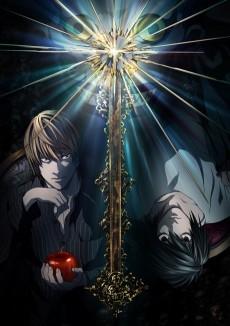
Death Note
Overview
Originally released in the monumental year of 2006, Death Note stands as one of the most influential and critically acclaimed psychological masterpieces in the history of television animation. Produced by the legendary studio MADHOUSE, this series instantly captivated global audiences with its dark, intellectual narrative and high-stakes moral dilemmas. The anime is adapted from a celebrated Japanese MANGA, ensuring that the depth, pacing, and complex character designs of the original written work were preserved with utmost fidelity.
Currently holding a stellar rating of 84 on OniDex, the series is officially categorized under the status of FINISHED, wrapping up its run after a meticulously crafted journey of 37 episodes. By combining elements of the Mystery, Psychological, Supernatural, and Thriller genres, the creators crafted a narrative web that remains as gripping today as it was during its initial broadcast. This profile offers an in-depth, historical exploration of the production, themes, characters, and cultural legacy of this landmark release.
Story Summary
The story of Death Note begins with an overwhelming sense of apathy. Light Yagami is a genius high school student who is incredibly disillusioned with the state of the world. Despite his academic excellence and seemingly perfect life, he finds the modern justice system flawed and the daily repetition of society mind-numbing. He is about to learn about life through a book of death, an event that will forever alter the course of human history.
Concurrently, in the desolate realm of the Shinigami, a bored God of Death named Ryuk decides to alleviate his own existential tedium. He drops a mysterious, black notepad called a Death Note into the human world. When Light stumbles upon this fallen notebook, he reads its rules with skepticism: any human whose name is written in its pages shall die. Intrigued, Light tests the book, only to discover that the supernatural power is terrifyingly real. With the stroke of a pen, Light receives absolute power over life and death.
Rather than shrinking away from this dark gift, Light views it as a divine mandate. Determined to use this power for what he believes is the ultimate best, Light sets out to rid the world of evil. He targets the people he believes to be evil, starting with violent criminals, aiming to cleanse society and establish a utopian world order where he reigns as a benevolent god. However, the unchecked executions quickly draw the attention of global law enforcement agencies, sparking an intense international investigation. The consequences of Light’s actions will set the world ablaze, leading to a relentless war of wits where the line between justice and murder is completely erased.
Main Characters
The narrative engine of the series is driven by the stark contrast and psychological friction between its central figures. The characters are written with immense depth, representing opposing philosophical viewpoints on law, authority, and human nature.
- Light Yagami: A genius high school student of unparalleled intellect, Light begins his journey as an idealistic young man frustrated by societal decay. Upon discovering the notebook, his psychological transformation begins. Driven by a desire to protect the innocent, he systematically executes criminals under the moniker “Kira.” However, as his power grows, so does his hubris. Light’s transition from a well-meaning vigilante to a cold, calculating mastermind highlights the corruptive nature of absolute power. His brilliance lies in his ability to predict his opponents’ moves, manage complex web of lies, and maintain a facade of a model student while orchestrating a global purging of crime.
- Ryuk: A bored Shinigami, or God of Death, who serves as the instigator of the entire narrative. Unlike traditional monsters, Ryuk is neither explicitly malevolent nor benevolent; he is driven entirely by a desire for entertainment. After dropping his notebook into the human realm, he hitches himself to Light, acting as a neutral observer. Ryuk’s detachment from human morality provides a unique perspective on Light’s actions. He watches Light’s schemes unfold with detached amusement, frequently reminding Light that he is merely a spectator who will eventually write Light’s name in his own notebook when the time comes.
Episode Information
Spanning exactly 37 episodes, the pacing of the series is a masterclass in narrative tension. Because the show has achieved the status of being completely FINISHED, viewers are treated to a cohesive, self-contained story arc that avoids the pitfalls of endless filler or unresolved cliffhangers. The episode structure mirrors the high-stakes chess match of its source material, with each episode building incrementally on the previous one’s psychological warfare.
The early episodes focus heavily on Light’s discovery of the notebook, the establishment of its strict supernatural rules, and the initial deployment of his justice. As the authorities close in, the middle stretch of the series evolves into a claustrophobic cat-and-mouse game, where every move, phone call, and surveillance camera becomes a potential death trap. The final leg of the 37-episode run explores the long-term consequences of Light’s ambition, culminating in a dramatic and definitive conclusion that answers the central question of whether humanity can ever survive the burden of such absolute authority.
Genres and Themes
The unique identity of this series lies in its sophisticated blending of four distinct genres, creating a rich thematic landscape that challenges the viewer’s personal ethics.
Supernatural and Mystery
The inclusion of the Supernatural genre is grounded in the existence of the Shinigami and the metaphysical rules governing the notebook. Rather than relying on chaotic magic or fantasy combat, the supernatural elements function under strict, almost scientific laws. This logic feeds directly into the Mystery genre. The investigators must solve a series of seemingly impossible heart attacks without knowing how the killer operates, while Light must solve the mystery of the investigators’ true identities to eliminate them.
Psychological and Thriller
As a Psychological Thriller, the anime excels in portraying internal monologues, intense paranoia, and cognitive warfare. The battle is fought not with fists, but with deduction, bluffing, and psychological manipulation. Every conversation is a minefield where a single misplaced word could result in death. The suspense is amplified by the viewer’s intimacy with Light’s thoughts, making the audience complicit in his dark descent.
Key Themes: “Should anyone hold such power?”
At the heart of the series is a profound philosophical inquiry: Should anyone hold such power? The narrative constantly forces the audience to confront the morality of utilitarianism. Is it ever justifiable to sacrifice human lives to achieve a peaceful, crime-free world? Light’s transformation demonstrates how easily noble intentions can degenerate into tyranny when one person assumes the role of judge, jury, and executioner. The series suggests that the possession of absolute power inevitably distorts human empathy, turning even a genius student into a victim of his own megalomania.
Production and Studio
The visual and auditory atmosphere of the series was brought to life by MADHOUSE, a studio universally revered for its high-production values, cinematic direction, and willingness to take on mature, complex source materials. Under their stewardship, the visual style of the MANGA was translated into a highly stylized, cinematic experience.
The animation quality is characterized by its dramatic lighting, sharp character models, and symbolic color palettes. To represent the psychological dualism of the characters, MADHOUSE utilized highly expressive lighting filters—often casting Light in cold, calculating blues or manic reds during his internal monologues. Even mundane activities, such as writing on paper or studying in a bedroom, were animated with intense, dynamic camera angles and exaggerated speed, turning everyday actions into thrilling battles. The atmospheric background designs, coupled with a gothic, choral soundtrack, established an ominous, operatic tone that elevated the narrative’s gravity.
Reception and Popularity
Upon its release in 2006, the series became an instant international phenomenon, a status reflected in its superb rating of 84. It transcended traditional demographics, attracting mainstream viewers who were drawn to its mature themes and intellectual rigor. The fan reception was overwhelmingly positive, with audiences praising the relentless pacing, the complex moral gray areas, and the intellectual duel between the protagonist and the law enforcement forces.
The cultural impact of the series is vast and enduring. It popularized the concept of the psychological duel in modern media, and its iconic elements—such as the black notebook, the rules pages, and Ryuk’s distinct design—became instantly recognizable symbols worldwide. Even decades after its completion, the series continues to be analyzed by academics, critics, and fans alike for its legal ethics, theological undertones, and psychological depth, cementing its legacy as a milestone of modern storytelling.
Why Fans Love This Anime
The enduring devotion of fans toward this 37-episode masterpiece can be attributed to several key factors that set it apart from typical animated offerings:
- The Intellectual Duel: Unlike series that rely on physical strength, the conflict here is purely intellectual. Fans are captivated by the elaborate strategies, counter-strategies, and the sheer brilliance of the minds involved in this high-stakes game of survival.
- Compelling Anti-Hero Protagonist: Light Yagami is a fascinating study of moral decay. Watching a protagonist slowly lose his humanity while maintaining his genius-level intellect keeps the audience perpetually engaged, even as his actions become increasingly monstrous.
- The Rules of the Game: The meticulous rules governing the notebook create a complex puzzle that viewers can try to solve alongside the characters. The logical consistency of these rules ensures that every twist and turn feels earned and believable.
- Gothic and Melodramatic Aesthetic: The combination of MADHOUSE’s gothic art style, dramatic use of shadows, and the haunting, classical score creates a unique, highly immersive atmosphere that perfectly matches the dark nature of the story.
Final Thoughts
With its status firmly cemented as FINISHED, this 2006 classic remains a mandatory watch for any enthusiast of the Mystery, Psychological, Supernatural, and Thriller genres. Through the brilliant production of MADHOUSE and the legendary foundation of its original MANGA, the series presents a chilling, unforgettable look into human nature, pride, and the fragile line separating justice from absolute villainy. Holding an impressive rating of 84, it is a timeless masterpiece that continues to challenge, thrill, and set the world of its viewers ablaze.