
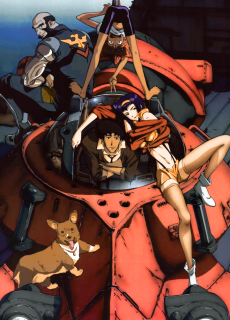
Cowboy Bebop
Overview
Cowboy Bebop, released in 1998, stands as a monumental pillar in the history of the medium. Produced by the renowned studio Sunrise, this original project redefined the aesthetic and narrative boundaries of science fiction. With a rating of 86, the series is widely regarded as a quintessential masterpiece, balancing high-octane action with profound, melancholic drama. Across its 26 episodes, the series crafts a cohesive universe that feels lived-in, weary, and endlessly compelling. As a finished work, it serves as a self-contained odyssey, leaving an indelible mark on viewers through its unique fusion of space exploration and grounded, human storytelling.
Story Summary
Set in a distant future where humanity has expanded into the solar system, the story follows a ragtag group of bounty hunters—or “cowboys”—who navigate the harsh realities of life on the fringe of civilization. The narrative centers on Spike Spiegel and Jet Black, partners operating out of their aging spacecraft, the Bebop. They lead a hand-to-mouth existence, constantly hunting criminals across various planets and moons to secure enough bounty rewards to fund their next meal or fuel their ship.
As their travels progress, the duo encounters a series of enigmatic individuals who eventually join their crew. There is Faye Valentine, a perpetually indebted gambler with a mysterious past; Edward, an eccentric, gender-fluid computer genius with a unique worldview; and Ein, a highly intelligent, genetically engineered Pembroke Welsh Corgi. Together, this dysfunctional family traverses the galaxy, seeking purpose while grappling with the ghosts of their individual histories. The narrative moves from episodic adventures to a deeper exploration of personal trauma and the inevitability of the past, culminating in a poignant conclusion that has solidified its place in television history.
Main Characters
The strength of this series lies in its character-driven narrative. Each member of the Bebop crew brings a different layer to the group dynamic:
Spike Spiegel: The primary protagonist, Spike is a lean, nonchalant bounty hunter with a lethargic demeanor that hides a lethal prowess in martial arts and firearms. His past as a former member of a criminal syndicate is a central mystery that looms over his present, fueling much of the tension throughout the 26 episodes.
Jet Black: A former police officer who lost his arm in the line of duty, Jet acts as the grounded, fatherly figure of the group. He is a pragmatic man who maintains the Bebop and keeps his volatile partners in check, often serving as the emotional anchor for the crew.
Faye Valentine: Introduced as a beautiful but opportunistic gambler, Faye is defined by her cynical exterior and her deep-seated fear of loneliness. Struggling with amnesia regarding her own origin, her search for identity serves as one of the most compelling arcs in the show.
Edward: A young, hyper-intelligent computer hacker, Edward—often referred to as “Ed”—adds a chaotic, whimsical energy to the ship. Despite her youthful appearance, she possesses a genius-level intellect, making her an indispensable, if unpredictable, member of the crew.
Ein: A genetically engineered dog, Ein serves as more than just a pet. Possessing high-level cognitive abilities, he is a silent observer of the group’s antics and a loyal companion who bridges the gap between the disparate human characters.
Episode Information
Cowboy Bebop consists of 26 episodes. Because the show was an original production rather than an adaptation, the writers had complete creative freedom to dictate the pacing and structure of the series. The episode count allows for a blend of standalone “bounty of the week” adventures and more serialized arcs that explore the backstories of the main cast. The conclusion of the 26th episode brings a definitive end to the journey, cementing the show’s status as a finished narrative that respects its own beginning, middle, and end.
Genres and Themes
The series occupies a unique space, blending Action, Adventure, Drama, and Sci-Fi. These genres are not merely labels but are deeply intertwined within the show’s DNA.
At its core, the show explores themes of existentialism and the weight of the past. Each character is essentially running from their history, yet they find that they are inexorably tied to it. The “cowboy” lifestyle is depicted not as a glorious space adventure, but as a struggle for survival in a frontier that is often indifferent to human suffering. Loneliness, the search for belonging, and the idea of “letting go” are recurring motifs that elevate the series beyond simple science fiction tropes. The juxtaposition of high-tech space travel with the gritty, noir-inspired realities of bounty hunting creates a unique tone that feels both futuristic and timeless.
Production and Studio
Sunrise, the powerhouse studio behind the series, demonstrated immense ambition with this 1998 production. Known for their technical prowess, the studio utilized a sophisticated blend of traditional cel animation and meticulous attention to character motion. The production values are consistently high, featuring detailed mechanical designs and fluid choreography that make the action sequences feel impactful and dangerous.
By choosing to produce an original project rather than relying on a pre-existing source material, the creators at Sunrise were able to implement a cohesive vision that prioritized atmosphere and aesthetic consistency. The studio’s reputation for excellence is perhaps best exemplified by how well this series has aged; even decades after its release, the animation quality remains top-tier, showcasing the technical mastery that defines the Sunrise legacy.
Reception and Popularity
Since its debut, the series has enjoyed a massive, sustained following. Its rating of 86 reflects the high esteem in which it is held by both critics and long-term fans. The show gained traction through its refusal to follow standard tropes of the era, opting instead for a mature, melancholic approach that resonated with adult audiences.
Fan reception has been overwhelmingly positive, with many citing the show as their entry point into serious, high-quality animation. The popularity of the series has remained steady over the decades, consistently appearing on “best of all time” lists. This enduring appeal is largely attributed to its distinct “cool” factor, the strength of its writing, and the fact that it tells a complete, satisfying story that requires no supplementary material to understand.
Why Fans Love This Anime
Fans are drawn to the series for its perfect marriage of style and substance. There is a palpable sense of mood in every frame, helped by a distinct art direction that feels like a blend of classic cinema, noir, and space opera.
The character development is another major draw. Unlike series that force growth through predictable power-ups or training arcs, the characters in this show evolve through loss and reflection. Viewers find themselves deeply invested in the personal struggles of Spike, Jet, and Faye because those struggles feel authentic to the human condition. Furthermore, the world-building is subtle; the solar system is portrayed as a gritty, industrial, and often lonely place, which makes the small, fleeting moments of connection between the crew members feel genuinely precious. It is a show that invites multiple rewatches, as every viewing reveals new details in the background art or nuances in the dialogue.
Final Thoughts
Cowboy Bebop remains a landmark achievement in the world of animation. Released in 1998 by the visionary team at Sunrise, it successfully blended genres and elevated the medium of television. Its 26-episode run provided the perfect canvas for a story that is as much about the human spirit as it is about the infinite possibilities of space.
As a piece of media, it avoids the pitfalls of over-extension, remaining a finished, focused work of art. The characters—Spike, Jet, Faye, Edward, and Ein—have transcended their origin to become icons of the genre. With its consistent rating of 86 and an enduring place in the hearts of viewers worldwide, the series serves as a testament to the power of original storytelling. It is a work that captures the essence of “cool” while never losing sight of the sorrow and beauty of existence. For any student of anime or enthusiast of high-quality drama, this series is not merely recommended; it is an essential experience that continues to define what the medium is capable of achieving.