
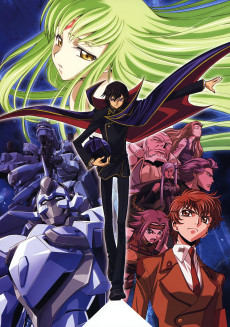
Code Geass: Lelouch of the Rebellion
Overview
Code Geass: Lelouch of the Rebellion stands as a monolith in the landscape of 21st-century animation. Premiering in 2006, this original production from the legendary studio Sunrise redefined the thriller and mecha genres by blending high-stakes political intrigue with a deeply personal, morally ambiguous revenge saga. With a solid OniDex rating of 85, the series has maintained its status as a quintessential viewing experience for both veteran enthusiasts and newcomers alike. Over the course of its 25-episode run, the series masterfully constructs an alternate history where the Holy Empire of Britannia exerts absolute dominance over the globe, with Japan—now rebranded as Area 11—serving as the central flashpoint for a revolution that threatens to reshape the world order.
Story Summary
The narrative of Code Geass: Lelouch of the Rebellion begins on August 10, 2010, the day the Holy Empire of Britannia initiated its swift and brutal conquest of Japan. This military campaign was made possible by the introduction of Knightmare Frames, advanced humanoid mobile weapons that rendered traditional warfare obsolete. Following the fall of the island nation, the Japanese people were stripped of their sovereignty and identity, relegated to the status of “Elevens” within a territory renamed Area 11.
The story follows Lelouch, an exiled Imperial Prince of Britannia living in anonymity as a high school student. His life is defined by a deep-seated hatred for his father, the Emperor, and a desire to dismantle the Britannian Empire for the sake of his sister, Nunnally. His trajectory changes irrevocably after a chance encounter with a mysterious, immortal girl known as C.C. Through her, Lelouch obtains the Geass, a supernatural “power of the king” that grants him absolute command over any individual once. With this ability, Lelouch adopts the persona of Zero, a masked revolutionary leader. Operating from the shadows, he orchestrates a complex insurgency, manipulating both the battlefield and the political landscape to bring the empire to its knees from within.
Main Characters
Lelouch Lamperouge (Lelouch vi Britannia): The protagonist and anti-hero of the series. He is a brilliant strategist whose intellect is matched only by his ruthlessness. Driven by a desire to create a gentler world for his sister, he is willing to sacrifice everything, including his own humanity, to achieve his goals.
C.C.: A mysterious, green-haired girl who bestows the Geass upon Lelouch. She acts as his accomplice and confidante, though her true motives often remain shrouded in mystery. Her connection to the supernatural elements of the story is pivotal to Lelouch’s evolution as Zero.
Suzaku Kururugi: A Japanese teenager who serves as the moral foil to Lelouch. Despite the oppression of the Elevens, Suzaku joins the Britannian military, seeking to change the system from within. His ideals of justice and honor clash directly with Lelouch’s “ends justify the means” methodology.
Kallen Stadtfeld (Kallen Kozuki): A student at Lelouch’s academy and a member of the Japanese resistance. She is a highly skilled Knightmare Frame pilot who serves as the backbone of the resistance forces, often finding herself torn between her loyalty to Zero and her personal connection to her classmates.
Episode Information
Code Geass: Lelouch of the Rebellion consists of 25 episodes, each meticulously crafted to propel the overarching narrative forward. As an original work, the pacing is notably tight, lacking the filler often associated with long-running series based on manga or light novels. The 25-episode structure allows for a condensed, high-intensity experience where every plot twist serves a specific purpose in the ultimate downfall of the Britannian occupation. The status of the series is officially FINISHED, leaving viewers with a complete, definitive arc that concludes the first chapter of Lelouch’s rebellion.
Genres and Themes
The series is categorized under Action, Drama, Mecha, Sci-Fi, and Thriller. These genres coalesce into a complex exploration of power, ethics, and identity.
One of the primary themes is the moral weight of leadership. Lelouch is constantly forced to weigh the lives of thousands against the potential for a peaceful future, creating a compelling drama regarding the nature of justice. The series asks difficult questions: Can a corrupt system be fixed from within, or must it be burned to the ground?
Another major theme is the use of the Geass itself as a metaphor for absolute power. The power to command anyone is inherently corruptive, and the narrative explores how such an ability affects the psyche of an individual who is already prone to manipulation. Furthermore, the theme of nationalism versus imperialism is central, as the characters struggle to reclaim their identity in a world dominated by the monolithic Britannian Empire.
Production and Studio
Produced by Sunrise, a studio renowned for its dominance in the mecha genre, Code Geass: Lelouch of the Rebellion benefits from an incredibly high standard of production. Sunrise’s reputation for blending intricate mechanical designs with fluid, high-octane action sequences is on full display here. The Knightmare Frames are distinct, featuring a unique “landspinner” movement system that separates them from standard robot tropes.
The animation quality is characterized by its distinctive visual style, featuring stylized character designs that emphasize long, angular limbs and expressive features. This aesthetic choice allows for highly emotional sequences that contrast sharply with the industrial, cold metallic designs of the Britannian war machine. The studio’s commitment to visual storytelling, combined with an original script, allowed for a level of creative freedom that resulted in some of the most memorable sequences in modern animation history.
Reception and Popularity
Since its release in 2006, the series has enjoyed massive commercial and critical success. It was a cultural phenomenon upon release, frequently topping charts and becoming a staple of anime discussions. Fans lauded the show’s ability to balance intricate tactical battles with intense, character-driven melodrama. The rating of 85 reflects its enduring appeal and its status as a must-watch title.
The reception was particularly strong due to the unpredictability of the plot. Unlike many shows of its time, Code Geass: Lelouch of the Rebellion was not afraid to make bold choices, resulting in high-stakes outcomes that kept the audience constantly guessing. This created a fervent fanbase that was highly engaged with the show’s weekly developments, cementing its place in the history of the medium.
Why Fans Love This Anime
The primary reason fans continue to flock to this series is the complexity of its protagonist. Lelouch is not a traditional hero; he is a manipulator, a liar, and an orchestrator of chaos. Watching him navigate the high-society world of the Britannian aristocracy while simultaneously directing terrorist operations in the slums is a thrilling experience.
The psychological warfare featured throughout the episodes creates a high level of tension that few other shows manage to replicate. Fans appreciate that the conflict is not just fought with Knightmare Frames, but with information, social manipulation, and chess-like strategy. The evolving relationship between Lelouch and his rivals—specifically the ideological conflict between him and Suzaku—provides a depth of character development that anchors the more bombastic sci-fi elements. The mystery surrounding C.C. and the origin of the Geass provides a compelling supernatural hook that keeps the viewer invested in the world-building.
Final Thoughts
Code Geass: Lelouch of the Rebellion remains a landmark accomplishment in the science fiction genre. By utilizing the 2006 release window to experiment with narrative structures and character archetypes, Sunrise created a show that feels as relevant today as it did upon its debut. Its combination of tactical brilliance, high-stakes political drama, and striking animation ensures that it will remain a cornerstone of the medium for decades to come. Whether one is drawn to the high-octane mecha battles or the deeply layered ethical dilemmas faced by Lelouch, the series offers a complete, satisfying, and masterfully paced journey that stands as a testament to the power of original animation. It is, without reservation, a foundational piece of literature in the history of global animation.