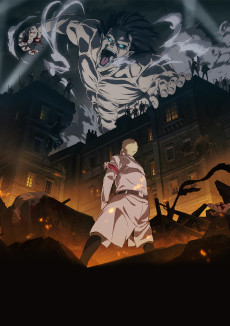
Attack on Titan Final Season
Overview
Originally airing in the landmark year of 2020, Attack on Titan Final Season represents a monumental shift in the landscape of modern Japanese animation. This highly anticipated season marks a dramatic turning point in a narrative that had already captivated millions of viewers worldwide. Classified under the rich and intense genres of Action, Drama, Fantasy, and Mystery, this installment serves as a bold departure from the established status quo, elevating the stakes from localized survival to a sweeping, global geopolitical conflict. With a status of FINISHED and comprised of exactly 16 episodes, the season represents a masterclass in adaptation, drawing directly from its acclaimed MANGA source material.
For this crucial chapter of the saga, production duties transitioned to the powerhouse studio MAPPA, a name synonymous with high-stakes adaptations and cutting-edge visual presentation. The database reflects an exceptional rating of 87, cementing its position as one of the most critically acclaimed and fan-favorite releases of the decade. As an entry in the OniDex archives, this profile provides a comprehensive, expert-level breakdown of the season’s complex narrative, its deep-seated themes, its production values, and the profound cultural impact it made upon its release in 2020.
Story Summary
The narrative of Attack on Titan Final Season begins with a stark and disorienting transition. It has been four years since the courageous members of the Scout Regiment finally reached the shoreline of their isolated island, discovering the truth of the world beyond the walls. The vast ocean, once a symbol of ultimate freedom, has instead revealed itself to be a gateway to an expansive and deeply hostile world. The geopolitical landscape has shifted dramatically, and the relative simplicity of fighting mindless monsters has been replaced by the terrifying complexities of human warfare, international diplomacy, and historical prejudice.
As the story unfolds, the focus shifts across the sea to the powerful nation of Marley, a militaristic empire that has long dominated the global stage by exploiting the devastating power of the Titans. Here, the age-old tensions between the ruling Marleyans and the oppressed Eldians are reaching a critical boiling point. The Eldians living within Marley are subjected to harsh segregation, viewed as second-class citizens and “devils” due to their ancestral ability to transform into Titans. They are forced to serve as frontline soldiers and “warrior candidates” in Marley’s imperialistic campaigns, desperate to prove their loyalty to a nation that despises them.
Meanwhile, the fate of the Scout Regiment—and the entire population of Paradis Island—hangs in a delicate, terrifying balance. The world at large is uniting under a shared hatred of Paradis, preparing for a massive military campaign that threatens to completely eradicate the island’s inhabitants. Amidst this encroaching doom, a central, chilling mystery drives the narrative forward: Eren is missing. The primary protagonist, whose driving fury once fueled the hopes of humanity within the walls, has vanished. His absence creates a vacuum of leadership and absolute uncertainty among his comrades in the Scout Regiment. Will he reappear before the deep-seated hatreds between Marleyans and Eldians ignite the war of all wars, or will his eventual return trigger a catastrophe unlike anything the world has ever seen?
Main Characters
The character dynamics in this season are characterized by extreme psychological depth, moral ambiguity, and the heavy physical and emotional toll of a four-year conflict. The narrative masterfully blurs the lines between protagonist and antagonist, forcing viewers to question their allegiances.
- Eren: No longer the impulsive, hot-headed youth of previous years, Eren has transformed into a calculating, enigmatic figure. Having gone missing prior to the start of the season, his sudden absence leaves both his allies in the Scout Regiment and the audience in a state of constant suspense. When he does re-emerge, his motives are shrouded in secrecy, and his methods are far more ruthless, reflecting a man who is willing to sacrifice everything—including his own humanity—to secure the survival of Paradis.
- The Scout Regiment: The surviving veterans of Paradis, including key leaders and elite soldiers, find themselves thrust into an unfamiliar global theater. They are no longer just defenders of a wall; they are international operatives forced to navigate complex political landscapes and the moral horrors of modern warfare. Their deep bond with Eren is severely tested as his rogue actions force them to question whether they are still fighting for the same future.
- The Marleyans: The military elite of the nation of Marley. They are driven by a desire to maintain global dominance and a profound fear of the “devils” of Paradis. Their leadership is determined to seize the power of the Titans for themselves, utilizing propaganda, military might, and systematic oppression to keep the Eldian population under their absolute control.
- The Eldians (of Marley and Paradis): The season explores the tragic division within the Eldian race. The Eldians of Paradis, represented by the Scout Regiment, fight for their right to exist in a world that demands their extermination. Conversely, the Eldians of Marley are brainwashed from birth to believe they must atone for the sins of their ancestors by serving their oppressors, creating a heartbreaking ideological clash when the two factions inevitably collide.
Episode Information
Spanning a total of 16 episodes, this season is meticulously paced to maximize dramatic tension and narrative efficiency. Rather than relying on filler, each episode serves as a vital puzzle piece in a larger, incredibly intricate picture. The initial episodes of this 16-episode run are particularly notable for their bold structure, choosing to immerse the viewer entirely in the perspective of the nation of Marley and its Eldian soldiers before reintroducing the familiar faces of Paradis.
This deliberate narrative choice builds an intense sense of anticipation. For several episodes, the audience is left wondering when, where, and how the Scout Regiment will make their move. When the collision finally occurs, the resulting conflict is chaotic, devastating, and emotionally exhausting. The 16-episode format ensures that every confrontation is packed with consequence, leading toward a dramatic climax that leaves the fate of the entire world hanging on a knife’s edge, perfectly setting the stage for the ultimate resolution of the story.
Genres and Themes
The thematic complexity of Attack on Titan Final Season is reflected in its diverse genre classifications, each of which is elevated to its absolute limit:
- Action: The action sequences are visceral, chaotic, and carry immense weight. Rather than celebratory displays of heroism, the battles are portrayed as horrific tragedies where human lives are snuffed out in an instant, and the devastating power of the Titans is shown as a terrifying force of mass destruction.
- Drama: At its heart, the season is a profound human drama. It explores the psychological trauma of child soldiers, the corrosive nature of state-sponsored propaganda, and the overwhelming weight of grief and betrayal. The drama is driven by characters who are trapped in a cycle of hatred, unable to find a peaceful path forward.
- Fantasy: The dark fantasy elements of the lore are expanded significantly. The origins of the Titans, the mechanics of their inheritance, and the supernatural connection shared by all Eldians are explored in greater detail, adding a mythic quality to the modern geopolitical conflict.
- Mystery: The season excels in maintaining a pervasive sense of mystery. From the opening episodes, viewers are left to piece together the events of the four-year timeskip, the true intentions of the missing Eren, and the hidden agendas of various factions competing for control of the Titan powers.
The overarching theme of the season is the devastating cycle of violence and the subjective nature of morality. By showing the perspective of both the Marleyans and the Eldians, the story dismantles the concept of absolute good and evil. It highlights how historical trauma, fear, and propaganda can drive normal human beings to commit unspeakable atrocities in the name of self-defense, posing the difficult question of whether true peace can ever be achieved when both sides believe they are fighting for survival.
Production and Studio
The year 2020 brought a monumental shift behind the scenes when studio MAPPA took over the production of this final chapter. Transitions of this magnitude are rare and incredibly risky for high-profile franchises, but MAPPA approached the challenge with immense dedication and artistic ambition. MAPPA’s reputation for delivering dark, mature, and visually striking adaptations made them the perfect fit for the tonal shift required by the final chapters of the manga.
Under MAPPA’s direction, the animation quality took on a grittier, more realistic, and manga-accurate aesthetic. The character designs were matured significantly to reflect the four-year timeskip, featuring heavier lines and more expressive, battle-worn facial features. MAPPA utilized a sophisticated blend of traditional 2D animation and advanced 3D CGI to render the Titans, allowing for complex, dynamic camera movements during the massive urban combat sequences. The environmental design was equally impressive, contrasting the industrial, European-inspired streets of Marley with the familiar, medieval-style architecture of Paradis Island. Combined with an epic, choral-driven soundtrack and exceptional voice acting, MAPPA’s production values successfully captured the apocalyptic scale of the narrative.
Reception and Popularity
Upon its debut in late 2020, the season immediately became a global cultural phenomenon. It dominated discussions across social media, with fans eagerly dissecting every episode, analyzing character motivations, and debating the moral implications of the conflict. The series achieved an extraordinary level of mainstream penetration, transcending the typical boundaries of the anime community to capture the attention of general audiences and prestigious television critics alike.
The exceptional rating of 87 in our database is a testament to the season’s outstanding quality and consistent execution. Critics praised the series for its bold narrative structure, mature themes, and its refusal to rely on easy moral answers. Fans lauded the seamless transition to studio MAPPA, celebrating the intense action set-pieces and the emotional resonance of the character arcs. The season’s ability to maintain such high critical acclaim while executing a complete shift in setting and perspective is widely regarded as one of the greatest achievements in modern anime history.
Why Fans Love This Anime
The enduring love for Attack on Titan Final Season stems from its uncompromising commitment to storytelling excellence. Fans are drawn to the absolute unpredictability of the narrative. In an era where many stories follow predictable paths, this series consistently subverts expectations, delivering shocking twists that are always grounded in meticulous foreshadowing and character logic.
Furthermore, the deep emotional connection that viewers have developed with these characters over the years pays off spectacularly in this season. Watching characters who started as simple, idealistic recruits struggle with the devastating realities of war and geopolitical betrayal creates an incredibly compelling viewing experience. The intense action, combined with MAPPA’s cinematic direction and the hauntingly beautiful musical score, ensures that every single episode is an unforgettable, high-stakes experience that leaves audiences clamoring for more.
Final Thoughts
In conclusion, Attack on Titan Final Season stands as a towering achievement in the world of animation. Released in 2020 by the visionary studio MAPPA, this 16-episode masterpiece successfully transitioned a beloved action series into a profound, politically charged epic of war, prejudice, and survival. It fully honors its MANGA roots while pushing the boundaries of what the medium can achieve in terms of narrative complexity and thematic maturity. Now fully FINISHED, its outstanding rating of 87 is a richly deserved reflection of its impact, ensuring its place as a definitive, legendary entry in the annals of anime history.