
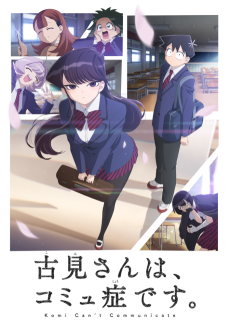
Komi Can’t Communicate
Overview
Komi Can’t Communicate, released in 2021, represents a significant milestone in the Slice of Life and Comedy genres. As a senior anime historian and researcher for OniDex, I have observed many adaptations of high-school-centric narratives, but few have captured the collective heart of the international community as effectively as this production by Studio OLM. Based on the widely popular manga source material, the anime arrived at a time when audiences were craving stories that combined high-quality visual artistry with deeply relatable human struggles. With a rating of 76, the series has solidified its place as a cornerstone of modern television animation, offering 12 episodes of meticulously crafted storytelling that explores the nuances of social anxiety and the fundamental human desire for connection.
The series centers on Shoko Komi, a high school girl who is widely regarded by her peers as a “goddess” due to her transcendent beauty and refined demeanor. However, this perceived perfection masks a paralyzing communication disorder that prevents her from speaking to others. The narrative officially begins when she meets Hitohito Tadano, an exceptionally ordinary boy who possesses an uncanny ability to read the atmosphere and understand the feelings of those around him. Their meeting sets off a journey that is both hilarious and heart-wrenching, as Tadano vows to help Komi achieve her dream of making 100 friends. Currently listed with a status of FINISHED for its initial run, the anime remains a frequently discussed topic in database circles and journalism, praised for its unique approach to character development and its stylistic flair.
Story Summary
The story of Komi Can’t Communicate is built upon a foundation of situational irony and emotional resonance. On his first day at Itan Private High School, Hitohito Tadano has one simple goal: to blend in and avoid any trouble. He purposefully chose a middle-of-the-road school and aims for a middle-of-the-road social life. However, fate intervenes when he is seated next to Shoko Komi. To the rest of the student body, Komi is an unapproachable beauty, a silent queen who looks down upon the commoners from a pedestal of elegance. Her silence is interpreted as stoicism, and her intense stares are seen as signs of a sharp, discerning mind. In reality, Komi is terrified. Her heart races at the prospect of saying “hello,” and her intense gaze is merely the result of her being frozen in a state of social panic.
Tadano is the first person to look past the “goddess” facade. During a poignant and quiet moment in a classroom, he realizes that Komi’s inability to speak is not a choice, but a profound struggle. In a sequence that has become legendary in the annals of Slice of Life history, the two communicate by writing on a chalkboard. It is through this chalk-and-slate medium that Komi reveals her deepest wish: she wants to talk to people, but she doesn’t know how. She shares her goal of befriending 100 people before graduation. Moved by her vulnerability and her simple, honest dream, Tadano becomes her first friend and promises to assist her in finding the remaining 99. The plot then follows their daily high school lives as they encounter various eccentric classmates, each representing a different extreme of the high school social spectrum, while slowly chipping away at the walls surrounding Komi’s heart.
Main Characters
The success of Komi Can’t Communicate is largely attributed to its well-defined and memorable cast. Shoko Komi is the focal point of the series. Her character design is a masterclass in visual storytelling. When she is seen through the eyes of the public, she is drawn with sharp lines, flowing hair, and a regal presence. However, when the audience sees her internal state, she often transforms into a simplified “chibi” version with large, expressive “bug eyes” that convey her frantic internal thoughts. This visual duality allows the audience to empathize with her anxiety while understanding why others find her intimidating. Her primary tool for interaction is a notebook, which she carries everywhere to write down the words she cannot bring herself to speak.
Hitohito Tadano serves as the audience surrogate and the emotional anchor of the show. His name is a pun on “Tada no Hito,” which literally translates to “just a person.” While he lacks the flashy personality traits of his peers, his superpower is his empathy. In a school full of narcissists and eccentrics, Tadano’s ability to observe and truly see people for who they are makes him the perfect foil for Komi. He acts as her translator, her protector, and her closest confidant, often sacrificing his own social standing to ensure Komi feels comfortable in new situations.
The third major pillar of the early cast is Najimi Osana. Najimi is a character whose gender is left intentionally ambiguous, and who claims to be childhood friends with literally every student in the school. While Tadano is the “average” observer and Komi is the “anxious” protagonist, Najimi represents the “social butterfly” taken to its absolute extreme. Najimi’s chaotic energy and immense social circle provide the necessary friction to force Komi out of her comfort zone. Najimi’s role is crucial for the Comedy genre aspects of the show, as they often orchestrate the various social games and outings that provide the backdrop for Komi’s growth.
Episode Information
The first season consists of 12 episodes, a standard count for modern seasonal anime that allows for a tight, well-paced adaptation of the manga source material. Each episode is typically divided into several short vignettes, mirroring the structure of the original manga chapters. This episodic format works perfectly for the Slice of Life genre, as it allows the series to explore different facets of school life—from the tension of a physical exam to the excitement of a summer festival—without losing sight of the overarching goal of making 100 friends.
The 12-episode run is expertly curated to show a clear progression in Komi’s character arc. In the early episodes, even the act of ordering a coffee or answering a phone call is treated with the gravity of a high-stakes thriller, highlighting the intensity of her social anxiety. As the series progresses toward the finale, the audience witnesses subtle but significant changes: Komi begins to initiate small interactions, her circle of acquaintances grows, and her bond with Tadano deepens into a tentative, sweet romance. The final episode of this set provides a sense of closure to the first phase of her journey while leaving the door open for the continued quest to reach her 100-friend milestone.
Genres and Themes
Komi Can’t Communicate is a multifaceted work that blends Comedy, Romance, and Slice of Life into a cohesive and heartwarming experience. The comedy is often derived from the disconnect between how the world perceives Komi and the reality of her internal panic. The misunderstanding trope is used here not for frustration, but for humor and empathy. The show also employs a unique “meta” comedy style, where onscreen text and narrators explain the social dynamics or provide definitions for the characters’ idiosyncratic behaviors, leaning into its manga roots.
The Romance genre elements are handled with extreme delicacy. It is a “slow-burn” relationship characterized by small gestures—a shared umbrella, a lingering gaze, or a supportive note. The romance never overshadows the main plot of friendship; instead, it grows naturally out of the mutual respect and understanding between Komi and Tadano. This grounded approach makes their interactions feel earned and emotionally resonant for the audience.
At its core, the Slice of Life aspect of the show deals with profound themes of social anxiety, communication, and the importance of looking beyond appearances. It challenges the “shining protagonist” trope by showing that even those who seem to have it all might be suffering in silence. The theme of “the courage to speak” is central to every episode. The anime highlights that communication is not just about the words spoken, but about the effort made to understand and be understood. This theme resonated deeply with a 2021 audience that was increasingly aware of mental health and the complexities of social interaction in the digital age.
Production and Studio
The production of Komi Can’t Communicate was handled by Studio OLM, a studio with a long-standing reputation for high-quality work and a diverse portfolio. Historically known for massive franchises and long-running series, OLM demonstrated a surprising level of artistic innovation with this project. The direction by Ayumu Watanabe and Kazuki Kawagoe brought a cinematic quality to the Slice of Life genre that is rarely seen in 12-episode seasonal shows. The use of vibrant color palettes, creative lighting, and varied art styles—ranging from hyper-detailed close-ups to simplified comedic sketches—showcases the studio’s technical range.
The animation quality is particularly notable for its “visual language.” Because the protagonist rarely speaks, the studio had to rely on visual cues to convey her emotions. The fluid animation of Komi’s hair, the subtle quivering of her shoulders, and the creative use of written text floating on the screen all serve to tell a story that words cannot. The sound design also plays a major role; the contrast between the lush, orchestral soundtrack and the sudden, jarring silences effectively simulates the feeling of social paralysis. OLM’s commitment to capturing the specific aesthetic of the manga source while elevating it with high-fidelity animation is a major reason for the show’s critical acclaim.
Reception and Popularity
Upon its release in 2021, Komi Can’t Communicate became an instant sensation. Within the global database community, it quickly climbed the charts, maintaining a solid rating of 76. Its popularity can be attributed to several factors, including its high visibility on streaming platforms and the massive pre-existing fanbase of the manga. However, its success went beyond just brand recognition. The show became a cultural touchstone on social media, with fans frequently sharing clips of Komi’s adorable reactions and the heartwarming moments of connection between the characters.
Critics praised the anime for its sensitive portrayal of social anxiety. Unlike some series that treat such conditions as a mere quirk for comedy, Komi Can’t Communicate treats its protagonist’s struggles with a blend of humor and genuine respect. The fan reception was overwhelmingly positive, with many viewers expressing that they felt “seen” by the show. The 76 rating reflects its status as a high-tier production that, while primarily a comedy, carries enough emotional weight to be considered a modern classic of its genre. The Finished status of the first 12 episodes left fans clamoring for more, solidifying its place as one of the most successful adaptations of the decade.
Why Fans Love This Anime
Fans are drawn to Komi Can’t Communicate for its incredible relatability. While most people may not be “goddesses” or “gods” of their high schools, almost everyone has experienced the feeling of being unable to find the right words in a social situation. The show validates these feelings of awkwardness and turns them into something beautiful and shared. The “Komi-san” character herself has become an icon for those who struggle with communication, representing a hopeful message that one can find friends and even love despite their social limitations.
Another reason for its massive popularity is the “wholesome” nature of the story. In a media landscape often dominated by conflict and cynicism, Komi Can’t Communicate offers a refreshing dose of kindness. The relationship between Komi and Tadano is built on pure intentions and mutual support. Furthermore, the eccentricities of the supporting cast provide a constant stream of entertainment. Each character is an exaggerated version of a high school archetype, yet they are all treated with a certain level of warmth by the narrative. The combination of OLM’s top-tier animation, the nostalgic high school setting, and the central quest for 100 friends creates a compelling “just one more episode” experience that keeps viewers coming back.
Final Thoughts
Komi Can’t Communicate is more than just a high school comedy; it is a visual and emotional journey through the complexities of human interaction. Studio OLM took a beloved manga source and transformed it into a 12-episode masterpiece that defined the 2021 anime season. With its 76 rating and lasting cultural impact, it stands as a testament to the power of the Slice of Life genre to tell stories that are both small in scale and massive in heart. Whether you are a fan of Romance, a lover of Comedy, or someone who simply appreciates high-quality animation, this series offers something profound. It reminds us that everyone has a voice, even if they need a little help—and a notebook—to find it.