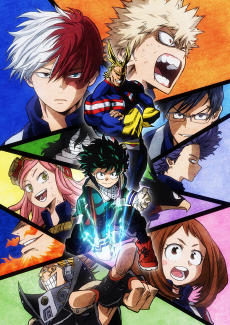
My Hero Academia Season 2
Overview
Released in 2017, the second season of this monumental series represents a pivotal moment in modern animation. Produced by the highly acclaimed studio bones, this season continues the adaptation of the widely successful source MANGA, expanding the narrative scope, elevating the visual fidelity, and solidifying the franchise’s standing in the global entertainment landscape. Holding a finished status and boasting a registered rating of 79, this 25-episode installment acts as a masterclass in episodic pacing, character development, and high-stakes action choreography.
As an anime database editor and historian for OniDex, analyzing this particular release requires looking at how a sequel builds upon its predecessor’s foundation. While the introductory season laid down the rules of the world, the society of heroes, and the basic mechanics of superpowers known as Quirks, the second season immediately throws its characters into the crucible of public scrutiny and intense competition. Spanning 25 episodes, it provides a significantly larger canvas for the creators to paint a detailed picture of academic pressure, societal expectations, and personal trauma, all wrapped in a vibrant aesthetic that captures the essence of its paper-and-ink origins.
The 2017 release arrived at a time when global appetite for serialized action narratives was reaching a fever pitch. By focusing on a highly organized school festival rather than a traditional villain-led conflict for its primary arc, the season managed to subvert typical narrative expectations while delivering some of the most emotionally charged and visually spectacular sequences of the decade. Studio bones utilized their immense technical expertise to ensure that every episode felt like an event, contributing heavily to the season’s sustained rating of 79 and its long-lasting legacy among fans and critics alike.
Story Summary
The narrative of the second season picks up immediately after the high-stakes, adrenaline-fueled conclusion of the first season. Following a daring defense against a sudden and coordinated villain intrusion at the school’s training facilities, U.A. High School is temporarily closed to ensure the safety of the students and to allow law enforcement to investigate the security breach. The atmosphere is tense, and the public is left questioning whether the institution can truly protect the next generation of protectors. However, when U.A. restarts, the administration makes a bold declaration: instead of retreating into the shadows, the school will proceed with its highly anticipated School Sports Festival.
This festival is not merely a recreational athletic meet; it has supplanted traditional national sporting events to become the country’s most-watched television spectacle. For the students, it represents the ultimate opportunity to showcase their abilities to professional hero agencies scouting for future sidekicks and interns. The stakes are incredibly high, as a strong performance can launch a student’s career, while a poor showing can relegate them to obscurity. In a grand display of academic inclusivity, the festival demands the participation of all classes within the institution. This includes the prestigious Hero Course, the innovative Support Course, the academically focused General Studies, and the strategically minded Business Course. This ensures a diverse clash of ideologies, skill sets, and motivations.
The competition is structured as an elimination tournament designed to test the versatility, adaptability, and raw power of the participants. It begins with a grueling obstacle course race around the perimeter of the massive stadium, forcing students to navigate giant robots, landmines, and hazardous terrain. This is followed by a high-stakes cavalry battle where points are distributed based on individual placements in the previous race, creating an intense environment of shifting alliances and tactical betrayals. Finally, the event culminates in a series of intense, one-on-one combat matches in a traditional tournament bracket. Through these various stages, the students are pushed to their absolute limits, forcing them to confront not only their physical boundaries but also the psychological burdens and family expectations that drive them to succeed.
Main Characters
The second season excels by giving depth to a broad ensemble cast, ensuring that the students outside of the primary spotlight receive meaningful development. At the center of the narrative is Izuku Midoriya, the protagonist who continues to struggle with the immense, self-destructive power of his inherited Quirk. For Midoriya, the Sports Festival is a trial by fire; he must find a way to compete against peers who have spent their entire lives mastering their abilities, relying on his tactical intellect, keen observational skills, and sheer force of will to advance without destroying his own body.
Standing directly in his path is Katsuki Bakugo, Midoriya’s volatile childhood rival. Guided by an unyielding desire to be the absolute best, Bakugo views the festival as a platform to assert his dominance over the entire student body. His fierce, explosive combat style is matched by a surprisingly sharp tactical mind, making him one of the most formidable competitors in the tournament. Yet, the season also explores the isolation that comes with his aggressive pursuit of victory, adding layers of complexity to his fierce persona.
Shoto Todoroki emerges as a central figure in this season, representing the heavy burden of legacy. As the son of a top-tier professional hero, Todoroki possesses a dual-element Quirk that allows him to control both fire and ice. However, due to deep-seated family trauma and resentment toward his father, he vows to win the tournament using only his ice powers, rejecting his fiery side entirely. His narrative arc during the festival serves as the emotional core of the season, exploring themes of identity, abuse, and self-acceptance.
The season also highlights supporting students from other courses, illustrating the class divide within U.A. High School. Tenya Iida, driven by the noble legacy of his older brother, struggles to balance his duty as class representative with his personal ambitions. Ochaco Uraraka showcases incredible grit and determination, fighting not just for glory, but to secure financial stability for her hardworking parents. Additionally, characters like Hitoshi Shinso from the General Studies course and Mei Hatsume from the Support Course bring unique perspectives, demonstrating how those overlooked by the traditional hero curriculum utilize their intellect and specialized gear to challenge the elite Hero Course students on equal ground.
Episode Information
Spanning a total of 25 episodes, the second season of this anime benefits greatly from an expanded broadcast run compared to its 13-episode predecessor. This generous episode count allows the creative team at studio bones to pace the adaptation meticulously, ensuring that no major character arcs or action sequences from the original MANGA are rushed or omitted. The 25-episode structure is effectively divided into distinct narrative movements, keeping the viewer engaged through shifting tones and escalating stakes.
The first half of the season is dedicated almost entirely to the multi-stage School Sports Festival. By dedicating over a dozen episodes to this single event, the anime is able to treat each round of the competition with the gravity of a major narrative arc. Individual matches in the one-on-one tournament are given ample time to breathe, allowing for detailed tactical setups, emotional flashbacks, and spectacular displays of supernatural abilities. Rather than condensing these matches into brief montages, the production team highlights the psychological warfare and personal growth occurring within the arena.
Following the conclusion of the festival, the remaining episodes of the season transition into the practical application of the students’ training. This segment covers their first professional internships under licensed heroes, exposing them to the real-world consequences of their chosen path. The narrative shifts from the controlled, safe environment of the school stadium to the unpredictable and hazardous streets of the city. The final episodes of the season focus on the school’s end-of-term exams, which pit pairs of students against their own teachers in high-stakes combat scenarios, wrapping up the 25-episode journey with a perfect balance of academic evaluation and physical trials.
Genres and Themes
Categorized under the Action, Adventure, and Comedy genres, this season masterfully balances these elements to create a cohesive and deeply engaging viewing experience. The Action genre is represented through some of the most meticulously choreographed and animated battles of the 2017 anime season. Every clash of Quirks is treated as a puzzle, where victory is determined not just by raw physical power, but by strategic positioning, environmental awareness, and psychological manipulation.
The Adventure element of the series is found in the developmental journey of the characters. This is not an adventure characterized by traveling across a vast fantasy world, but rather an internal and societal exploration. The students are embarking on the perilous journey of growing up, navigating the transition from idealistic children to professional figures who must carry the weight of public safety. The Comedy genre acts as a vital counterweight to the intense action and dramatic tension. Studio bones utilizes expressive character animation, witty dialogue, and classic visual humor to humanize the characters, ensuring that the school environment still feels like a genuine place of youth, friendship, and lighthearted interactions.
Thematically, the season delves deep into the concepts of legacy, privilege, and the true meaning of heroism. The contrast between the Hero Course and the General Studies/Support classes highlights the inherent inequalities of their society, questioning a system that judges a person’s worth solely based on the combat utility of their birth-given abilities. Todoroki’s struggle against his father’s ambitions explores the theme of self-determination, asking whether one can separate their identity from their genetic legacy. Furthermore, the season constantly interrogates the motivations of its cast, contrasting those who seek fame and fortune with those who possess a genuine, self-sacrificing desire to protect others, establishing a complex moral landscape that elevates the show far beyond a simple good-versus-evil narrative.
Production and Studio
The production of the second season was handled by studio bones, a name synonymous with high-quality action animation in the Japanese animation industry. Founded by former industry veterans, bones has built a stellar reputation over the decades for their fluid hand-drawn animation, dynamic camera movements, and ability to adapt complex manga fight scenes into cinematic masterpieces. Their work on this 2017 release represents a high watermark for television anime production values during that era.
Under the guidance of a dedicated creative staff, bones elevated the visual presentation of the series in several key areas. The character designs remain remarkably faithful to the original MANGA’s expressive and bold art style, while the animation itself features incredible density and weight. During the major tournament fights, the studio employed highly skilled key animators to draft sequences utilizing complex perspective shifts and impact frames, conveying the devastating power of the characters’ abilities with startling clarity. The use of vibrant, saturated colors contrast sharply with the darker, high-contrast shadows used during moments of intense emotional distress, visually reinforcing the narrative’s psychological depth.
Beyond the visual spectacle, the production’s sound design and musical score deserve significant praise. The orchestral and rock-infused soundtrack perfectly complements the shifting tones of the 25 episodes, providing triumphant themes during moments of breakthrough and solemn, melancholic melodies during revelations of character trauma. The seamless integration of high-end visual effects, meticulous sound editing, and stellar voice acting showcases the immense synergy present within studio bones, demonstrating why they remain one of the most respected production houses in the global industry.
Reception and Popularity
Upon its release in 2017, the second season was met with widespread critical acclaim and a massive surge in global popularity. In the database community, it secured a highly respectable rating of 79, a testament to its consistent quality and broad appeal across different demographics of anime viewers. This rating reflects the consensus of both casual fans who appreciate the high-energy entertainment and seasoned critics who praise the season’s thematic depth and structural integrity.
The popularity of the season can be traced to its execution of the classic tournament format. Historically, tournament arcs are highly anticipated events in serialized action narratives, but they are difficult to execute without feeling repetitive or halting the main plot. This season succeeded spectacularly by using the tournament as a primary engine for character progression rather than a distraction from it. Every single fight served a narrative purpose, revealing new facets of the characters’ personalities, backgrounds, and philosophies, which kept audiences highly engaged week after week.
The global reception was also bolstered by the season’s accessibility. While the narrative contains deep themes and complex character relationships, the core premise of young people striving to overcome their limits in a competitive school environment is universally relatable. The 2017 broadcast saw the franchise transition from a promising newcomer into a dominant global brand, driving massive sales of the source MANGA and cementing the series as a staple of modern pop culture. Its impact was felt across social media platforms, fan communities, and international conventions, establishing a passionate global fanbase that remains highly active to this day.
Why Fans Love This Anime
The enduring affection for this 25-episode season stems from its exceptional character writing and its ability to deliver genuine emotional payoffs. Fans are drawn to the palpable sense of struggle that defines the cast. Unlike narratives where protagonists receive effortless power-ups, the characters here must bleed, strategize, and suffer to make even the slightest bit of progress. Izuku Midoriya’s journey of learning to control his Quirk is slow and painful, making his moments of triumph feel earned and deeply satisfying to the audience.
Furthermore, the sports festival format allows fans to invest in a wide variety of characters, not just the central protagonist. Every viewer can find a character whose motivations, design, and struggles resonate with them personally. Whether it is Uraraka’s desperate drive to help her family, Iida’s struggle to live up to his family’s honorable name, or Shinso’s quiet resentment of his villain-like ability, the season treats every participant’s dream with respect. This empathy-driven writing ensures that even when two student characters are fighting each other, the audience is torn on who to root for, creating a highly engaging and emotionally complex viewing experience.
Lastly, the visual execution of the battles by studio bones provides a level of sheer kinetic excitement that few series can match. The combination of brilliant color direction, impactful sound design, and fluid character movement creates sequences that fans rewatch constantly. The ideological clash between Todoroki and Midoriya during the tournament, for instance, is widely regarded as one of the most iconic moments in modern action animation, perfectly blending spectacular visual pyrotechnics with a profound, character-altering narrative resolution.
Final Thoughts
In retrospect, the 2017 release of the second season stands as a definitive high point for modern television anime. By taking the foundation of the source MANGA and enhancing it with studio bones’ signature production values, the creative team delivered a 25-episode masterpiece that successfully balances intense action, lighthearted comedy, and poignant drama. It proved that a school tournament could be utilized as a profound vehicle for character study, transforming what could have been a simple athletic competition into a battlefield of ideologies and personal redemption.
With its finished status and a strong rating of 79 on OniDex, this season remains an essential watch for any fan of the medium. It represents an era of production where care, passion, and technical expertise aligned perfectly to create a cultural phenomenon. For researchers and historians of the industry, it serves as a premier example of how to execute a sequel, raising the stakes and deepening the lore while keeping the human element firmly at the center of the spectacle. It is a triumphant celebration of youth, ambition, and the relentless drive to go beyond one’s limits.