
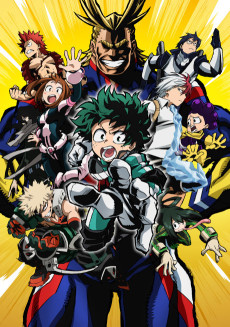
My Hero Academia
Overview
Welcome to OniDex, your premier archival resource for comprehensive animation analysis, historical database curation, and professional industry journalism. In this detailed profile, we turn our analytical lens toward one of the most significant television releases of the modern era: My Hero Academia. Released during the competitive spring broadcasting season of 2016, this production emerged as a defining release for its production company, its genres, and the medium of televised animation as a whole.
Based on a highly successful Japanese manga source, the television adaptation was entrusted to the renowned animation studio bones. The project was structured as a tightly paced, high-impact 13-episode season, which has since concluded its broadcast, marking its database status as FINISHED. Serving as the foundational block of a massive media franchise, this initial 13-episode run established the core narrative parameters, introduced the central cast, and set the stylistic tone for the entire intellectual property.
In our comprehensive database, My Hero Academia holds an impressive user and critic rating of 77. This score represents a highly favorable critical reception, highlighting its broad appeal across diverse demographic groups. Categorized under the primary genres of Action, Adventure, and Comedy, the series masterfully balances intense physical conflict with expansive world-building and lighthearted character interactions. In this archive, we examine the structural, thematic, and production elements that allowed this 2016 release to solidify its position in the history of modern animation.
Story Summary
The narrative of My Hero Academia is set in an alternate reality where humanity has undergone a massive evolutionary leap. In this world, approximately 80 percent of the global population manifests extraordinary, superhuman abilities known as “Quirks.” These powers typically manifest in individuals by the tender age of four, fundamentally altering the fabric of human society, law enforcement, and daily life. With the vast majority of the population possessing some form of superpower, the traditional societal structure has evolved to accommodate two distinct classes: professional heroes, who are licensed to use their Quirks to protect the public, and villains, who utilize their extraordinary abilities for malevolent and chaotic purposes.
In this hyper-powered society, becoming a professional hero is the ultimate career path and the highest social achievement. To handle the complex task of training these superpowered individuals, specialized educational institutions have been established. Chief among these is U.A. High School, an elite academy whose prestigious Hero Program is designed to scout, train, and license the next generation of protectors. However, this system leaves a marginalized minority: the 20 percent of the population who are born “Quirkless,” lacking any supernatural abilities whatsoever in a world that increasingly defines human worth by them.
The story focuses on Izuku Midoriya, a dedicated middle school student who dreams of becoming a professional hero more than anything else in the world. Unfortunately, Izuku is born Quirkless. Possessing not an ounce of superhuman power, his aspirations of attending the illustrious U.A. High School and joining its competitive Hero Program seem entirely out of reach. Society, his peers, and his own physical limitations point toward a bleak, dead-end future where his dreams can never align with reality. Despite the immense psychological and social hurdles, Izuku remains an obsessive student of heroism, meticulously documenting the abilities and tactics of existing heroes in his notebooks.
Izuku’s life undergoes a paradigm shift following a chance encounter with All Might, the undisputed “greatest hero of them all.” All Might stands as the ultimate symbol of peace, justice, and physical power in this superhuman society. Recognizing the raw determination, selflessness, and heroic spirit within the otherwise powerless middle schooler, All Might provides Izuku with a monumental opportunity to transcend his biological limitations. This encounter serves as the primary catalyst for the narrative, granting Izuku Midoriya a pathway to challenge his destiny, strive for admission into U.A. High School, and begin his arduous journey toward becoming a hero.
Main Characters
Given the constraints of the initial 13-episode run, the narrative maintains a sharp, character-driven focus on two primary figures whose relationship forms the emotional and thematic backbone of the series.
- Izuku Midoriya: The central protagonist of the series. When the story begins, Izuku is a powerless middle school student navigating the harsh realities of being Quirkless in a society that values superhuman traits. Despite his lack of inherent power, Izuku is characterized by his profound analytical mind, deep-seated empathy, and an unwavering desire to save others. His journey is one of extreme perseverance, transitioning from a marginalized youth facing a dead-end future to a determined contender for a spot at U.A. High School. His character archetype subverts the traditional power fantasy by emphasizing that true heroism begins with the spirit, intellect, and heart, rather than physical supremacy.
- All Might: Reveled globally as the “greatest hero of them all,” All Might is the pinnacle of physical strength, societal reassurance, and moral integrity. Within the narrative, he serves as the ultimate goal for aspiring heroes and the chief protector of peace. Despite his god-like public persona, All Might’s encounter with Izuku reveals a more complex, mentoring side to his character. By choosing to help Izuku change his destiny, All Might transitions from a distant societal icon into a deeply personal mentor, guiding the young protagonist through the physical and mental trials required to inherit the mantle of a true hero.
Episode Information
The 2016 adaptation of My Hero Academia was structured as a single-cour television season consisting of exactly 13 episodes. In the landscape of modern anime production, a 13-episode run requires meticulous pacing and structural discipline to successfully introduce a complex world, establish character dynamics, and deliver a satisfying narrative arc.
Rather than rushing through massive amounts of source material, the production team utilized these 13 episodes to carefully adapt the foundational chapters of the original manga. The season focuses heavily on Izuku Midoriya’s initial struggles as a Quirkless middle schooler, his life-changing encounter with All Might, his rigorous physical conditioning, and his subsequent attempt to enter the highly competitive U.A. High School Hero Program. By limiting the scope of the first season to 13 episodes, the series ensured that every episode was packed with crucial character development, high-quality action sequences, and meaningful narrative progression. This focused approach left the database status of this specific season as FINISHED, while establishing a rock-solid foundation for the franchise’s future.
Genres and Themes
As cataloged in our database, My Hero Academia is defined by three primary genres: Action, Adventure, and Comedy. Each of these genres is integrated into the narrative to create a cohesive and engaging viewing experience.
- Action: The action in this series is defined by the creative application of Quirks. Because 80 percent of the population possesses unique abilities, the physical confrontations are highly tactical and visually diverse. The action is not merely about raw physical strength; it is a battle of intellects, where characters must understand the mechanics, limitations, and potential of their powers. This elevates the action sequences from simple spectacles to crucial narrative vehicles that drive character development.
- Adventure: The adventure element is driven by Izuku Midoriya’s personal quest to transcend his limitations. His journey takes him from the familiar, mundane setting of his middle school to the grand, challenging environment of U.A. High School. The adventure lies in the discovery of this hyper-powered society, the exploration of the Hero Program, and the continuous physical and mental hurdles Izuku must overcome to claim his place in a world that initially rejected him.
- Comedy: To balance the heavy themes of societal discrimination and high-stakes heroic battles, the series employs a vibrant sense of comedy. The humor arises naturally from the eccentric personalities of the characters, the absurdity of certain Quirks, and the expressive, exaggerated visual reactions of the cast. This comedic relief ensures that the series maintains an energetic, accessible, and entertaining tone throughout its 13 episodes.
Thematically, the series delves deeply into the concepts of destiny versus determination. Izuku Midoriya’s status as a Quirkless individual represents a biological destiny of powerlessness. His refusal to accept this “dead end” and his willingness to undergo grueling physical and mental trials highlight the power of human will. Another central theme is the true nature of heroism. Through the contrast between the power-obsessed society and Izuku’s innate selflessness, the series argues that a true hero is defined not by the extraordinary power they possess, but by their instinct to protect and inspire others, even when they have nothing to give.
Production and Studio
The production of My Hero Academia is a testament to the high standards of its animation studio, bones. Founded by former industry veterans, bones has built a stellar reputation within the global animation community for producing some of the most fluid, visually dynamic, and mechanically complex action sequences in televised history. Their involvement in this 2016 project was a major factor in its initial anticipation and eventual success.
Adapting a manga source requires a studio to translate static, ink-drawn panels into kinetic, flowing animation. Studio bones achieved this by utilizing a bold, comic-book-inspired aesthetic that honors the source material’s artistic style. The character designs are highly expressive, featuring thick outlines, vibrant color palettes, and dramatic shading that capture the superhero ethos. During high-stakes action sequences, the studio employs advanced camera movements, detailed particle effects for Quirk activations, and meticulous hand-drawn key frames that convey immense weight, impact, and speed.
Furthermore, the production design of the urban environments, the futuristic architecture of U.A. High School, and the distinct visual identities of Izuku Midoriya and All Might showcase bones’ commitment to world-building. The seamless integration of physical comedy, emotional character acting, and blockbuster-level action choreography demonstrated the studio’s versatility and solidified their reputation as one of the premier production houses in the animation industry.
Reception and Popularity
Upon its release in 2016, My Hero Academia captured the immediate attention of the global animation community. In our database, the series maintains a highly respectable rating of 77. This score reflects a strong consensus among viewers and professional critics alike, who praised the series for its emotional sincerity, engaging narrative progression, and exceptional production values.
The popularity of the series can be attributed to several factors. Globally, the superhero genre was experiencing a massive cultural renaissance in 2016. My Hero Academia capitalized on this trend by offering a fresh, eastern perspective on superhero mythology. By blending the classic tropes of a school-life setting with the high-stakes dynamics of a superhero society, the series appealed to both traditional animation fans and mainstream audiences who were already enamored with heroic narratives. The success of the 13-episode first season acted as a launchpad, transforming the original manga source into a global phenomenon and establishing the franchise as a modern staple of popular culture.
Why Fans Love This Anime
The enduring appeal of My Hero Academia lies in its ability to connect with audiences on an emotional level. Here are the primary reasons why fans continue to hold this 2016 release in such high regard:
- The Ultimate Underdog Journey: Izuku Midoriya is an incredibly relatable protagonist. His feelings of inadequacy, the pain of being told his dreams are impossible, and his desperate desire to prove his worth resonate deeply with anyone who has ever faced overwhelming odds. Watching an underdog fight tooth and nail for a chance at greatness is a universally compelling narrative.
- The Mentorship Dynamic: The relationship between Izuku and All Might is the emotional core of the season. All Might is not just a powerful benefactor; he is a father figure and a mentor who believes in Izuku when no one else would. This dynamic of passed-down legacy and mutual respect adds profound emotional weight to the story.
- Creative World-Building: The concept of a society where 80 percent of the population has a unique superpower manifested at age four is endlessly fascinating. Fans enjoy exploring the mechanics of this world, from the laws governing Quirk usage to the structure of the prestigious U.A. High School.
- Outstanding Visuals by bones: The animation quality provided by studio bones is a constant source of admiration. The impact of the fights, the expressiveness of the character animation, and the overall artistic polish make the 13 episodes a visual feast.
Final Thoughts
In retrospect, the 2016 adaptation of My Hero Academia stands as a masterclass in how to launch a modern animation franchise. By combining a compelling manga source with the industry-leading production capabilities of studio bones, the project delivered a 13-episode season that was both critically acclaimed and commercially successful. With its balanced blend of Action, Adventure, and Comedy, and a solid database rating of 77, this completed season remains a must-watch for any enthusiast of modern televised animation. It proved that even in a world dominated by extraordinary powers, the most compelling story of all is the journey of a powerless boy who refused to let his circumstances define his destiny.