Attack on Titan
Overview
In the landscape of modern Japanese animation, few titles have achieved the monumental stature and global reach of Attack on Titan. Released in the landmark year of 2013, this gripping television series quickly established itself as a dark fantasy masterpiece, captivating audiences worldwide with its high-stakes narrative, visceral horror, and profound psychological depth. Produced by the highly esteemed WIT Studio and adapted from a popular manga source, the anime presents a grim, claustrophobic world where humanity is pushed to the absolute brink of extinction. Rated at an impressive 85 by database editors and critics alike, this finished 25-episode production represents a high-water mark for modern action-drama storytelling. As a professional anime database entry on OniDex, this comprehensive profile dissects the structural, thematic, and technical components of this legendary series, exploring its foundational premise, major themes, and lasting cultural legacy.
Story Summary
The narrative of Attack on Titan is set in a bleak reality where humanity has been systematically hunted and nearly exterminated by monstrous humanoid creatures known as Titans. These colossal beings, typically standing several stories tall, possess seemingly no intelligence. They roam the landscape with a singular, terrifying purpose: to devour human beings. What makes these giants truly horrific is that they do not consume humans for sustenance; they have no biological need for food, meaning their relentless slaughter is driven by what appears to be pure pleasure.
To escape total annihilation, the surviving remnant of humanity retreated behind extremely high walls. These barriers are incredibly massive, standing even taller than the largest of the Titans, offering a secure sanctuary for several hundred years. By the start of the series, the walled city has enjoyed over a century of uninterrupted peace, and the terrifying existence of the Titans has faded into historical legend.
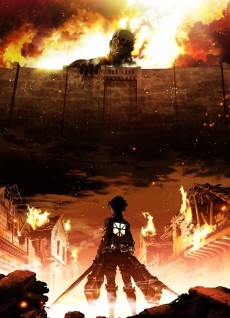
This fragile illusion of safety is shattered when Eren, a strong-willed teenage boy, and his foster sister, Mikasa, witness an unprecedented catastrophe. Out of thin air, an impossibly massive Colossal Titan appears, towering over the outermost wall and breaching it with ease. As the defensive barrier crumbles, smaller Titans flood the city streets, unleashing chaos and carnage. In the ensuing panic, Eren and Mikasa watch in absolute horror as their own mother is eaten alive. Consumed by grief and a burning fury, Eren makes a solemn vow that will define his entire existence: he will murder every single Titan and take revenge for all of mankind. This traumatic event propels the narrative forward as Eren, Mikasa, and the remaining survivors join the military to wage a seemingly hopeless war against their monstrous oppressors.
Main Characters
At the heart of Attack on Titan are compelling and resilient characters whose personal struggles reflect the overarching tragedy of their world.
Eren: The central protagonist of this 25-episode saga. Defined by his fierce determination and unyielding desire for freedom, Eren is shaped entirely by trauma. Witnessing the death of his mother at the hands of a Titan instills in him a singular goal: the complete annihilation of the Titan race. Eren’s motivations are deeply personal, driven by a mix of grief and vengeance. His journey is one of constant struggle, channeling his immense rage into military discipline to survive the brutal training.
Mikasa: Eren’s foster sister, who serves as his primary protector and emotional anchor. Quiet, composed, and exceptionally skilled, Mikasa possesses unparalleled combat prowess. Her tragic past has made her fiercely protective of Eren, and her primary motivation is keeping her remaining family safe from harm. Her calm demeanor under pressure contrasts sharply with Eren’s impulsive anger.
Eren’s Mother: Though appearing briefly, she is a crucial character whose brutal death serves as the ultimate catalyst for the story. Her final moments, pleading for her children to survive while she is helplessly trapped, encapsulate the grim reality of this world.
The Colossal Titan: The primary antagonistic force at the onset of the narrative. Appearing suddenly, this massive entity defies everything humanity thought they knew about their giant foes. Its intelligence and ability to vanish into thin air introduce a deep sense of mystery and dread, proving that humanity’s walls are no longer safe.
Episode Information
This adaptation of Attack on Titan spans a tightly paced 25-episode run, a structure that allows for a comprehensive introduction to its complex world. Holding a status of FINISHED, this initial season meticulously balances world-building, intense action, and narrative progression.
The 25 episodes are strategically divided to maximize dramatic tension. The opening episodes establish the horror of the initial breach, the loss of Eren and Mikasa’s home, and the immediate, desperate evacuation of the civilian population. Following this devastating introduction, the series transitions into a military training arc, where the young protagonists must endure rigorous physical and psychological conditioning. This section is crucial, as it builds camaraderie among the recruits and prepares them for the high stakes of actual combat.
As the episodes progress, the narrative thrusts the newly trained soldiers back into the fray when another breach threatens the inner territories. The remaining episodes are filled with tactical warfare, desperate defense operations, and shocking revelations that challenge everything the characters believe about their world. By the time the 25-episode run reaches its conclusion, the story has evolved from a simple tale of survival into a highly complex geopolitical and existential mystery.
Genres and Themes
The multifaceted nature of Attack on Titan is reflected in its diverse genres: Action, Drama, Fantasy, and Mystery. Each of these elements is woven together to create a cohesive and deeply engaging viewing experience.
The Action genre is represented through high-flying, kinetic combat sequences. Humans utilize specialized three-dimensional maneuvering gear to navigate the vertical landscapes of the walled cities, attempting to strike the weak points of the towering Titans. This creates a unique style of combat that is fast-paced, dangerous, and visually spectacular.
The Drama is rooted in the extreme psychological pressure placed upon the characters. The constant threat of being eaten alive, the loss of comrades, and the heavy moral decisions forced upon young soldiers create a pervasive sense of tragedy. The series does not shy away from the horrific realities of grief and survivor’s guilt.
As a work of Dark Fantasy, the series builds an isolated world governed by mysterious rules. The massive walls create a medieval aesthetic where humanity’s development has been stunted by captivity. The bizarre, uncanny valley appearance of the Titans adds a layer of surreal horror.
The Mystery genre is a compelling driving force of the narrative. From the first episode, viewers are confronted with critical questions: Where did the Titans come from? Why do they eat humans despite having no digestive systems? What lies beyond the walls? The search for these answers keeps the audience constantly engaged.
Thematically, the series explores the concept of the “walled world” as both a physical and psychological cage. It questions the cost of safety versus the pursuit of freedom. Eren’s desire to see the outside world represents humanity’s innate urge to break free from self-imposed limitations, even if doing so invites danger and death.
Production and Studio
The technical execution of Attack on Titan is a testament to the creative vision of WIT Studio. Released in 2013, this project was a defining moment for the studio, establishing its reputation as a powerhouse capable of producing high-budget, visually stunning, and narratively complex adaptations.
WIT Studio’s approach to adapting the original manga source is characterized by an incredible attention to detail. The studio utilized a unique blend of traditional hand-drawn animation and dynamic 3D backgrounds to bring the high-speed maneuvers of the soldiers to life. The camera angles during the combat scenes are incredibly ambitious, swooping and diving alongside the characters as they swing through the air, creating an unparalleled sense of momentum and scale.
Furthermore, the character designs are sharp and heavily lined, capturing the raw, gritty aesthetic of the original manga. The Titans themselves are animated with a terrifying, grotesque fluidity, emphasizing their unnatural movements and unsettling facial expressions. The production quality extends to the sound design and musical score, which utilize sweeping orchestral arrangements to emphasize the epic scale and tragic undertones of the human struggle. Through this masterful production, WIT Studio set a new benchmark for what action animation could achieve.
Reception and Popularity
Upon its release in 2013, Attack on Titan experienced an unprecedented explosion in popularity, transcending traditional boundaries to become a global mainstream phenomenon. This widespread acclaim is reflected in its high database rating of 85, a score that underscores its critical and commercial success.
The series captured the attention of audiences worldwide due to its immediate hook and relentless pacing. The shocking imagery of the first episode, combined with the relatable, high-stakes struggle of the characters, made it highly viral. It appealed not only to established fans of the fantasy and action genres but also to general viewers who were drawn in by the intense drama and horror elements.
Culturally, the impact of the series was immense. The iconic image of the Colossal Titan peering over the massive wall became an instantly recognizable symbol in pop culture. The global fan reception was overwhelmingly positive, with viewers praising the series for its refusal to pull punches, its unpredictable plot developments, and its outstanding production values. It successfully elevated the profile of WIT Studio and cemented the franchise as one of the defining intellectual properties of the decade.
Why Fans Love This Anime
There are several key factors that contribute to the enduring love and passion that fans hold for Attack on Titan.
First is the series’ ability to generate genuine, nail-biting suspense. The stakes in this world are incredibly high; no character feels entirely safe from the horrifying jaws of the Titans. This vulnerability creates a palpable sense of tension, making the action sequences feel genuinely dangerous.
Secondly, the mystery-driven narrative keeps fans deeply invested. Every answered question raises three more, turning the viewing experience into an active intellectual engagement. Fans love dissecting clues throughout the 25 episodes, forming theories about the origins of the Titans.
Thirdly, the dynamic between Eren and Mikasa provides a strong emotional anchor. Eren’s raw determination and Mikasa’s quiet, lethal devotion create a compelling contrast that grounds the chaotic action in human emotion. Their shared trauma makes their struggle deeply empathetic.
Finally, the artistic triumph of WIT Studio’s animation cannot be overstated. The thrill of watching human soldiers swing through the air using three-dimensional maneuvering gear to fight giant monsters is a visual spectacle unmatched in kinetic energy and cinematic flair.
Final Thoughts
In conclusion, the 2013 release of Attack on Titan stands as a monumental achievement in the medium of anime. With its status currently marked as FINISHED for this historic 25-episode run, the series remains as impactful today as it was when it first shocked the world. Through a masterful combination of visceral action, intense drama, dark fantasy, and compelling mystery, WIT Studio crafted an unforgettable adaptation of the original manga.
Boasting an exceptional rating of 85, this production successfully proved that a story about giant, man-eating monsters could serve as a profound vehicle for exploring complex themes of freedom and survival. For both seasoned anime historians and casual viewers, this series represents a gold standard of serialized storytelling, leaving an indelible mark on global pop culture.